Mailchimp
Not subscribed to OpsMatters Newsletter


Many Gmail users were recently greeted with a message that alerted them that 2-step verification will be required to log into their accounts starting on November 9th (today). While many in the security community have been advising people to turn on 2-factor, 2-step, or any other secondary security method on every account as a way to protect the login process, the Twitterverse showed that many people were unhappy with Google’s implementation of this mandatory change.
When David McCheyne, DevOps Engineer at Datto, outlined a plan to ease the company into developer-first security using Snyk, he thought it would take his teams a year to prove the concept. A seasoned DevOps pro, David understood very well the enormity of this change and was prepared to slowly introduce Datto security champions to the Snyk platform and not force the process.
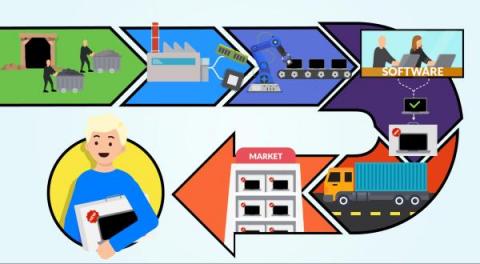
The new threats in software development are not only related to the specific company itself. The whole software supply chain is a target for attackers and it is really important to make sure that we put all our effort into securing each link because if one fails, everything will be affected. Supply chain activities include each step of the transformation of raw materials, components, and resources into a completed product, and its delivery to the end customer.
In a previous blog I reviewed the foundational use case for a TIP, which is threat intelligence management—the practice of aggregating, analyzing, enriching and de-duplicating internal and external threat data in order to understand threats to your environment and share that data with a range of systems and users. However, one of the unique benefits of the ThreatQ Platform and where organizations are deriving additional business value, is that it also allows you to address other use cases.
STOCKHOLM, SWEDEN – Detectify, the SaaS security company powered by ethical hackers, announces new product names for the core products developed for security teams defending medium to large enterprise companies. On November 11th, the product names will be switched from Asset Monitoring to Surface Monitoring, and where you previously saw Deep Scan you will now see Application Scanning.
If every vulnerability seems to be equally critical, engineers would get overwhelmed and probably waste time on the wrong issues. This is why it’s important for developer security tools to provide clear and simple prioritization functionality. As you’ve likely noticed, Snyk Code provides a Priority Score on the top right corner of the overview panel. When hovering over it, an explanation is shown how the priority score was calculated.