Security | Threat Detection | Cyberattacks | DevSecOps | Compliance

You're Not Watching MCPs. Anthropic's Vulnerability Shows Why You Should Be.

Last week, researchers at OX Security published findings that should stop every security leader in their tracks. They discovered a critical vulnerability baked directly into Anthropic's Model Context Protocol SDK, affecting every supported language: Python, TypeScript, Java, and Rust. The result: remote code execution on any system running a vulnerable MCP implementation, with direct access to sensitive user data, internal databases, API keys, and chat histories. Over 7,000 publicly accessible servers.

Mapping DORA to ISO 27001 and SOC 2

Rate this post Last Updated on April 22, 2026 by Narendra Sahoo For EU financial entities facing DORA compliance, the prospect of simultaneously managing ISO 27001 and SOC 2 can feel overwhelming. The reality is far more encouraging: these three frameworks share deep structural overlap, and organisations that approach them as an integrated compliance program — rather than separate projects — can reduce compliance duplication by 40–60%.

Strengthening authentication with passkeys: A CISO playbook

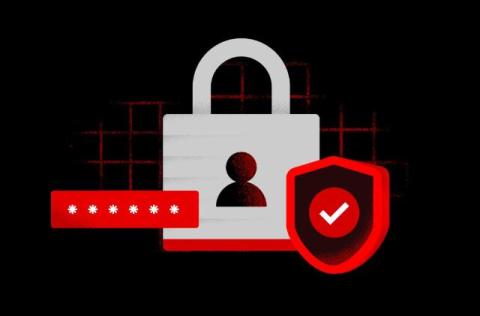
For decades, passwords have been the standard method for protecting access to systems and accounts. However, passwords can be compromised or stolen via tactics such as brute-force attacks, phishing attacks, and infostealer malware. The shift to multi-factor authentication (MFA) added another layer of security by requiring additional authentication to verify the user’s identity – some combination of something you know, own, or (in the case of biometrics) are.

Anthropic's Mythos and the New Reality of AI Cybersecurity Risk

I was on ABC News recently discussing why banks are on alert as new AI systems like Anthropic’s Claude Mythos raise cybersecurity concerns. What struck me most is how quickly the conversation has shifted. This is no longer a hypothetical risk or something we are planning for in the future. Financial institutions and regulators are reacting in real time to what AI is already capable of doing. From my perspective, we are still underestimating how fast this is moving.

Built for MSPs: Is Your Security Ready for Today's Threats?

Managed service providers are under more pressure than ever—protecting multiple clients, managing growing toolsets, and responding to increasingly sophisticated cyber threats. But fragmented solutions, alert fatigue, and limited visibility can slow you down and impact the service your clients rely on. Today’s MSPs need more than just more tools.

What cyber conflict reveals about power and doctrine, with Allie Mellen

Cyber conflict is easiest to misread when we treat it as an isolated technical event. In this episode of Chasing Entropy, Dave Lewis speaks with analyst and author Allie Mellen about her book Code War and why the cyber strategies of the United States, China, and Russia make more sense when viewed through the lens of history, doctrine, and political intent.

The ROI of DSPM: What CISOs Need to Know

Data security budgets are under more scrutiny than ever. When a CISO brings a new tool to the table, finance and the board want to know: What does this buy us, and how do we measure it? Data security posture management (DSPM) is one of the harder investments to quantify on paper, largely because its primary value is risk reduction rather than revenue generation. But that framing undersells it.

Understanding DISP Membership and Requirements in the Defence Industry Security Program

If you work with the Australian defence sector, DISP membership is no longer optional. The Defence Industry Security Program (DISP) is a baseline requirement for organisations operating in or supplying into Australian Defence. Most companies still treat DISP in defence as a compliance checkbox, but that approach fails. DISP is about reducing real operational risk across the supply chain.