Security | Threat Detection | Cyberattacks | DevSecOps | Compliance

Government Data Breaches Are Eroding Public Trust - It's Time for Stronger Cybersecurity in the Public Sector

The recent data breach at the Australian Human Rights Commission (AHRC) is a stark reminder of what's at stake when public sector cybersecurity falls short. The exposure of sensitive personal information—coupled with a delayed response that exceeded the Notifiable Data Breach (NDB) Scheme's 72-hour notification benchmark—highlights systemic challenges in how government agencies prepare for, detect, and respond to cyber threats. This breach isn't an isolated event.


June 9, 2025 Cyber Threat Intelligence Briefing

This week’s briefing covers: Proof of Concept Exploit Released for CVE-2025-32756 Further to Kroll reporting in May regarding a critical zero-day vulnerability, CVE-2025-32756 in Fortinet, is now being actively exploited in the wild, with attackers using a crafted AuthHash cookie to gain control of affected systems.

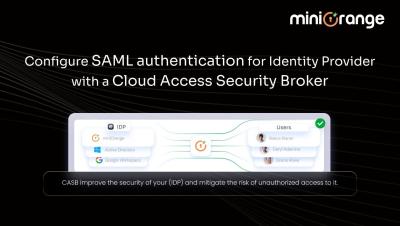
How to set up SAML Authentication for IDP?

Learn How to Set Up SAML Authentication for Your Identity Provider Using CASB In this step-by-step tutorial, we’ll walk you through setting up SAML authentication with your Identity Provider (IdP) using a Cloud Access Security Broker (CASB) via the miniOrange dashboard. What You’ll Learn: Why Use CASB with SAML? CASB adds a layer of visibility and control for your cloud services. Combined with SAML authentication, you get centralized, secure, and compliant user access management across your cloud apps.

How to Secure Your Business Data on Gmail, Google Drive, Docs, and more.

Are you using Google Workspace Applications to store your business data? Cyberattacks on Google Workspace are skyrocketing, but with miniOrange Google CASB solution, you can shield your business data against unauthorized access and data breaches. In this video, we’ll showcase: Learn how to secure your Google Workspace and take control of your data security today. Watch now to find out how to protect your business!

Securing SSH on RHEL: 5 Essential Configuration Steps

Linux distributions, such as Red Hat Enterprise Linux (RHEL), dominate the enterprise and cloud computing sectors. One of the many reasons for the success and popularity of Linux is its support of convenient and straightforward remote access protocols, such as Secure Shell (SSH). In the right hands, SSH’s ability to securely access remote servers enables access to any Linux server, regardless of the environment. The problem is that, in the wrong hands, SSH can be a security nightmare.

How to Identify, Avoid, and Protect Against Counterfeit Software Product Keys

Software product keys are essential tools used to verify ownership and secure software usage. These keys function as unique access codes that grant authorized users permission to install and activate licensed software. Choosing legit software product keys ensures users receive reliable access while reducing the risk of malware or invalid licensing. By protecting intellectual property and reducing piracy, they allow developers to maintain control over distribution and ensure that only legitimate users gain full access. Additionally, product keys support user authentication and enable access to software updates or additional features.

Is Your Rented Server Safe Enough?

We get it-you've rented a server. Whether it's for your business, your app, your game, or just that brilliant startup idea you're nurturing, renting a server feels like leveling up. It's exciting, empowering... and terrifying. Because the moment that server is online, it's visible to the entire internet. Including the bad guys. Hackers, bots, DDoS armies, and other digital troublemakers don't care that it's "just a test project." If it's online, it's fair game. So, how do you protect it?