Security | Threat Detection | Cyberattacks | DevSecOps | Compliance

The Latest Cybersecurity News & Insights From Around The World


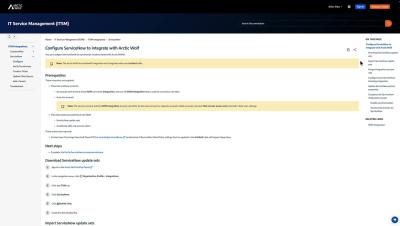
How to Integrate ITSM in Aurora Vulnerability Management for Better Visibility & Faster Remediation
See how Arctic Wolf Aurora Vulnerability Management turns risk visibility into remediation through seamless integrations with partners like ServiceNow and ConnectWise. This demo shows how automated ticketing, unified workflows, and prioritized findings help security and IT teams accelerate remediation without added workload.

The Danger of Legitimate Remote Tools
How threat actors use AnyDesk and TeamViewer to bypass security.

Is Your Security Built for Today's World?
MSPs are under pressure to deliver stronger security across a growing customer base without adding more tools or people. Despite this, many still rely on approaches that don’t scale, leading to gaps, alert overload, and missed opportunities to grow their security business. The goal of this 30-minute session is to help MSPs take a step back and assess how they’re delivering security today. We’ll walk them through the most common pressure points, help identify where their current approach is falling short, and guide them toward the next conversation based on what matters most to their business.

Shiny Hunters' Supply Chain Playbook: How Tech and Enterprise Get Breached Without Clicking a Single Phishing Link
If you look at the cybersecurity setups of massive companies like Rockstar Games, Medtronic, or Amtrak, they look like digital fortresses. They spend millions on top-tier firewalls, hire elite security teams, and lock down their perimeters. Yet, all of them have made headlines for major data breaches. Recent Data Breaches How does this happen if their security is so good? The answer is simple: Attackers didn’t kick down the front door.

We Pentested a Complex API Application with AigentX AI Agent - Then Verified the Results with Source Code Review
How AigentX found 24 real vulnerabilities, confirmed what wasn't exploitable, and discovered risks that code review alone could never catch.
How to Reduce Alert Fatigue in AI Agent Detection: Why It's a Unit-of-Detection Problem, Not a Triage Problem
When AI agent workloads start generating more alerts than your SOC can keep up with, the instinct most teams reach for is to deploy more triage on top of what they already have. If the SIEM is producing thousands of atomized alerts, plug in something downstream that can cluster, prioritize, and auto-resolve them faster than a human can. The market has consolidated around exactly this answer.

Accelerating Cloud Security Outcomes Together: Why Arctic Wolf and Wiz are Redefining What's Possible
Across every industry, one thing has become abundantly clear: Cloud security has never been more critical, nor more complex. Organizations are scaling cloud environments faster than ever, but the explosion of identities, configurations, and services has created an attack surface that traditional approaches simply can’t keep up with. Teams are drowning in alerts, struggling to identify which issues matter, and facing increasing pressure to respond to threats with limited resources.

AI builders can now easily access 1Password secrets management and developer tools
AI coding tools have changed who builds software. The barrier to entry has dropped to the point where a designer, an analyst, or a first-time founder can turn an idea into a working app in an afternoon. That shift is real, and it's accelerating.
Analyzing TAX#TRIDENT: Fake Indian Tax Lures Pivot Across ZIP, VBS, Stego and PHP-Wrapped VBS Delivery
Securonix Threat Research tracks TAX#TRIDENT, an active fake Indian Income Tax-themed campaign that uses three delivery paths to reach Windows endpoints. The campaign starts with fake tax assessment lures and then moves victims toward ZIP files, VBScript downloaders, or PHP-looking web endpoints that actually return script content.