Security | Threat Detection | Cyberattacks | DevSecOps | Compliance

Secure External User Access in JSM: How SSO Prevents Spam Tickets

Managing external customer access in Jira Service Management (JSM) often seems straightforward, but it can create recurring problems for many teams: large volumes of spam tickets. When the customer portal allows anonymous submissions, bots and unsolicited traffic can freely enter the system, slowing support operations, affecting the customer experience, and introducing unnecessary security exposure. Teams usually see the same symptoms.

Privilege Creep Explained: How to Detect and Prevent It in Organizations

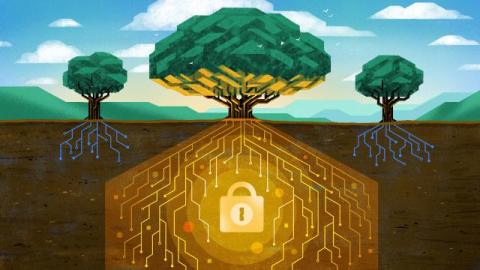
Invisible or hidden risks often corrupt organizations inside out. These are hard to detect and go unnoticed for a prolonged period. Privilege Creep, one such hidden risk, is a silent security gap, where there is an accumulation of inessential access rights of employees over a period of time. This could pave the way for unauthorized access and breaches.

Solving the AI Data Gap: Secure Enterprise File Access via Egnyte's MCP Server

Enterprise organizations face a fundamental challenge in AI adoption. While tools like ChatGPT and Claude offer transformative capabilities, their effectiveness is limited without secure access to organizational data. Critical business information often stays locked in secure repositories, limiting AI assistants from providing business-specific insights. Without secure access to mission-critical content, AI assistants fall short of their potential.

The State of Cloud Security in 2026, with Shira Rubinoff

What really happened in cloud security in 2025 and what should security leaders prepare for in 2026? In this session, cybersecurity leader, Shira Rubinoff breaks down the biggest cloud security challenges organizations faced in 2025, why cloud misconfigurations and IAM complexity are still major risks, and how CISOs should rethink cloud security strategy and budgeting for 2026.

runc container escape explained: Critical container vulnerabilities & host takeover risk

Containers are supposed to be isolated — but what happens when that isolation breaks? In this video, we explain critical container escape vulnerabilities in runc, the default container runtime used by Docker and Kubernetes, and why they represent a serious container security risk. Recent disclosures known as the “Leaky Vessels” vulnerabilities show how a compromised container can escape its sandbox, access the host filesystem, and potentially take over the node.

Demo: Access controls for GenAI and agentic AI

See how Cloudflare One simplifies access controls across both generative AI and agentic AI communication — all from one unified secure access service edge (SASE) dashboard. This demo highlights: Securing human-to-AI connections by as blocking or redirecting from unapproved tools and isolating AI apps to protect data (0:09) Streamlining access to MCP servers for AI-to-resource connections via Cloudflare’s MCP server portals (1:10)

Demo: Discover workforce use of shadow AI

See how Cloudflare One helps restore visibility and controls over unsanctioned use of AI tools. This demo highlights secure access service edge (SASE) capabilities including: Shadow AI reporting: Analyze how AI apps are used across your environment 0:10 Application confidence scores: Evaluate the risks posed by specific AI apps 1:10 Access controls: Allow, block, redirect, isolate, and more based on an app’s approval status 1:45.

Demo: Prevent data exposure in AI

See how Cloudflare One helps protect sensitive data when users interact with generative AI apps. This demo highlights secure access service edge (SASE) capabilities including: Data loss prevention (DLP) detections for sensitive content (e.g., PII, source code, financials) 0:22 Detections for data at rest in AI tools like ChatGPT 1:00 Guardrails for user prompts based on intent / topic to block jailbreak attempts, code abuse, PII requests, and other risky behavior 2:12.