Security | Threat Detection | Cyberattacks | DevSecOps | Compliance

Cyberhaven: Data Security for the Agentic Enterprise

AI changed work, Cyberhaven protects it. Cyberhaven exists to protect the way enterprises actually work today: with AI agents accessing, moving, and acting on data across every workflow. In this video, we share Cyberhaven's mission and our stance on data security for the agentic enterprise.Traditional data security, built for files at rest, wasn't built for AI agents acting at machine speed. Cyberhaven traces data through its full lifecycle and adapts protection as context changes, so security keeps pace with how work actually happens.

Best API Discovery Tools for Lineage Mapping

API discovery has become a foundational capability for modern enterprises as API ecosystems expand across cloud-native applications, microservices, SaaS integrations, partner APIs, and AI-powered workflows. By 2027, 78% of applications are expected to use APIs, and with that growth comes an urgent need for visibility that goes far beyond simply listing endpoints.

The EU AI Act: Compliance for Companies Serving the EU Market

The EU AI Act is a global business issue. Just like GDPR before it, it reaches beyond EU borders. If your organization does business in the EU, you are in scope. Full enforcement begins August 2, 2026, with fines of up to 35 million euros or 7% of global turnover for non-compliance.

Making Tines 3B

Description: Tines 3B is an AI-native environment that gives every team the power to build agents, apps, and automations with AI, and gives IT and security the control to govern that work safely across the business. Here, Eoin Hinchy (Co-founder and CEO), Stephen O'Brien (Head of Product), Eoghan Reid (Lead Product Designer), and Rosie Ellison (Product Manager) share the story behind building Tines 3B, and the mission driving it: making automation 100x simpler and 100x faster, without compromising on AI governance or control.

Introducing Tines 3B

Your teams are moving fast with AI — but is IT and Security able to see what's actually being built? IT and AI leaders are facing a career-defining challenge right now: AI-generated code and shadow AI spreading faster than anyone can track. Introducing Tines 3B — a single, secure environment that gives employees the freedom to build with AI, and gives IT and security the control to govern that work safely.

How a Network-First Strategy Buys Time for Patching

What can organizations do when a critical vulnerability can't be patched right away? In this video, Daniel dos Santos, VP of Research, explains how a network-first approach can reduce exploitability by restricting access to vulnerable services while remediation is underway. By limiting reachability, security teams can reduce risk and give patching teams the time they need to test and deploy fixes.

Don't Wait for a Crisis: Rehearse Your Zero-Day Response

How do you prepare for a zero-day attack before one impacts your organization? In this video, Daniel dos Santos explains why security teams should use past vulnerabilities and real-world attack scenarios to rehearse response plans. By testing decisions, controls, communications, and recovery actions—not just documentation—organizations can build confidence and improve readiness for future threats.

America's New Security Doctrine: Hardening Digital and Supply Chain Borders

In the span of six weeks this summer, the United States government issued three separate security directives that, on the surface, appear to address completely different problems. One tightens how federal agencies patch software vulnerabilities. Another creates a government-industry clearinghouse to triage AI-discovered bugs. The third restructures how defense contractors source the raw materials that go into missiles, aircraft, and military electronics. Different agencies. Different languages.

UK vs Europe: comparing the physical threat landscape facing the rail sector

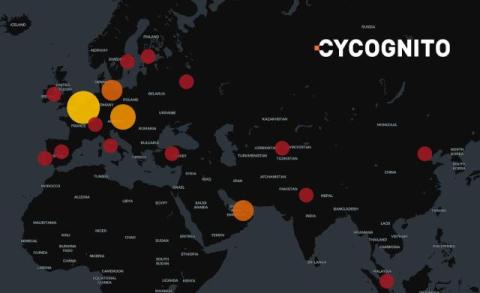
Rail networks sit at the intersection of critical national infrastructure and daily public life, making them a persistent target for protest, industrial action, infrastructure crime and, in parts of Europe, suspected sabotage tied to geopolitical tensions. This analysis from CYJAX sets out the physical threat picture in the UK alongside that of the wider continent.