There are unquestionable advantages to cloud native technologies, but significant challenges as well. Case in point: microservices authorization. Microservices have, for many companies, become the architecture of choice for cloud native apps — whether for migrating legacy apps or building new cloud native applications.
For the next installment in our series of interviews asking leading security and compliance specialists about their achievements in their field, we’ve welcomed Rhia Dancel, Lead Auditor and CMMC Registered Practitioner with the NSF. Rhia Dancel is an ISO/IEC 27001 and 9001 Lead Auditor for NSF-ISR as well as a CMMC Registered Practitioner and has previously held several auditing and technical positions in information security and pharma quality sectors.
The Center for Internet Security (CIS) controls are a relatively short list of high-priority, highly effective defensive actions that provide a “must-do, do-first” starting point for every enterprise seeking to improve its cyber defense. Initially developed by the SANS Institute and known as the SANS Critical Controls, these best practices are indispensable to organizations both large and small. By adopting these sets of controls, organizations can prevent the majority of cyberattacks.
Recently, ThreatQuotient hosted an interactive discussion regarding security orchestration and cyber security automation adoption – what it is, what it’s meant to do, and why it can present a challenge for security teams to set up and maintain. What we heard from attendees was that the most common issues preventing them from integrating some form of security automation into their internal processes are the necessary time and resources.
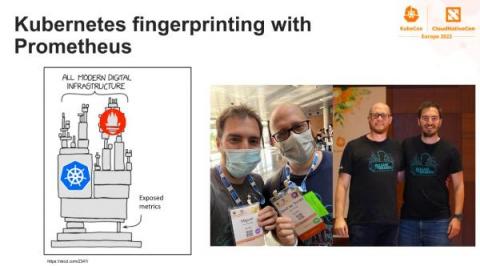
You might think that your metrics are harmless from a security point of view. Well, that’s not true, and in this talk at KubeCon Valencia 2022, we share the risk of exposed Prometheus server and how attackers use this information to successfully access a Kubernetes cluster. The slides are available here, and we also collected some mentions in social media and blogs and the feedback was very positive: It was our first time as speakers at KubeCon and expectations were really high.
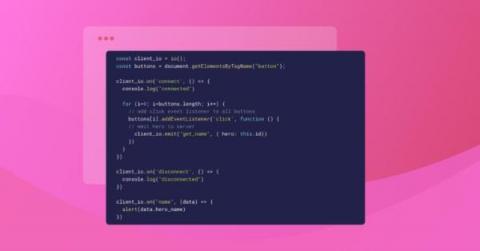
Typically, when a web app needs something from an external server, the client sends a request to that server, the server responds, and the connection is subsequently closed. Consider a web app that shows stock prices. The client must repeatedly request updated prices from the server to provide the latest prices.
Today, WatchGuard announced that Vector Capital, a leading private equity firm specializing in transformational investments in established technology businesses, closed the deal to acquire interests previously owned by other co-investors, and become the company’s majority shareholder.