Security | Threat Detection | Cyberattacks | DevSecOps | Compliance

The Latest Cybersecurity News & Insights From Around The World



Gartner Market Overview for DLP: Why Modern DLP Must Understand How Data Moves
Data loss prevention (DLP) has been around for decades. But the way data moves today looks very different from the environment traditional DLP was built to protect. That change comes through clearly in the new Market Overview for Data Loss Prevention by Gartner. We see that Gartner describes a mature market undergoing significant evolution, with cybersecurity leaders increasingly looking for DLP that is adaptive, policy-driven, risk-based and AI-enhanced.
The Agentic SOC: Four Myths, Busted
A security leader finishes a pitch to the board about an agentic SOC that pairs AI agents with analysts to address the coverage gap. A hand goes up. “So, the AI decides who’s a threat?” It’s a fair question. It’s also the wrong one, built on a myth that’s common enough to stall adoption on its own.

The Best AI Agent Risk Quantification Tools in 2026
Search for agent risk quantification tools and most results are risk assessment tools. Questionnaires, maturity scores, compliance trackers and templates, all producing an ordinal rating. A rating ranks one agent against another. It does not tell anybody what to spend, what to insure or what to stop. The separating question is whether the output arrives in currency.
The Autonomous SOC Was a Promise SOAR Never Kept
David Melamed is Head of Emerging Technologies at Torq. He joined through Torq’s acquisition of Jit, which he co-founded and has led as CTO since 2020, building agentic security on a production Context Graph. A cloud security veteran with 20+ years of experience, David previously held senior technical roles at Cisco (via the CloudLock acquisition) and MyHeritage. For all the gods and monsters in The Odyssey, the ship mostly moves for one reason: men row it.
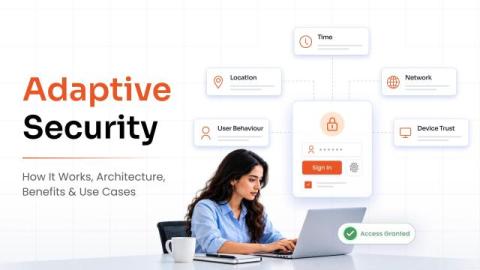
Adaptive Security: How It Works, Architecture, Benefits & Use Cases
Adaptive security is a cybersecurity approach that continuously monitors users, devices, networks, and security events to identify risks and adjust defenses in real time. Unlike static security models that rely on fixed rules and periodic updates, adaptive security responds to changes in behavior, context, and threat levels as they occur. It continuously evaluates security risks, detects unusual or suspicious activity, and adapts security controls based on the situation.
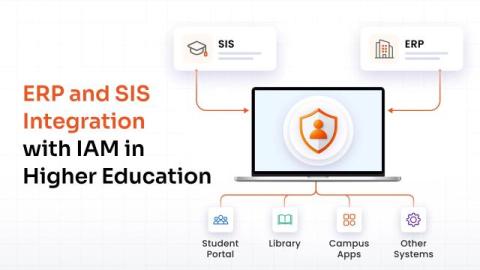
ERP and SIS Integration With IAM for Higher Educational Institutes
Higher education institutions manage identity information across systems such as Enterprise Resource Planning (ERP) platforms, Student Information Systems (SIS), and HR systems. These records determine whether someone is a student, employee, faculty member, researcher, alumnus, or another type of campus user. Integrating these systems with Identity and Access Management (IAM) lets institutions use those records to manage digital identities and access throughout the user lifecycle.
Who owns your AI agents? Probably no one
AI agents are multiplying faster than most organizations can track, let alone govern. IDC predicts there will be 1.3 billion agents by 2028. Every team that adopts one is also, often without meaning to, creating a new identity. And it’s one that can access systems, move data, and act on someone's behalf. The rush right now is to get ahead of that before it spirals, and the first step is to answer a basic question: whose job is this?

Cybersecurity Budget Planning for 2027
A budget presented as a total invites one question with two answers, approve or reduce. A budget presented as a ranked list invites a different question, which is where to draw the line, and that is a decision a board can make rather than a negotiation it can only win or lose. The ranking comes from one calculation per candidate control. Expected loss before, minus expected loss after, divided by cost. Order the list by that ratio and the budget builds itself, including the part that says stop.

Why Security Controls Need a Source of Truth | Garrett Hamilton on TAG Infosphere
Every security team has a source of truth for its assets and its identities. Very few have one for how those assets are protected. Here Garrett explains what that source of truth has to look like and why it has to be deterministic. Garrett joined Ed Amoroso of TAG Infosphere for a wider conversation on AI, security controls, and assurance. The full interview covers.