Security | Threat Detection | Cyberattacks | DevSecOps | Compliance

Tines' Field CISO Matt Muller on security's communications problem and the future of the SOC

In this week’s episode of The Future of Security Operations podcast, Thomas is joined by Matt Muller, Field CISO at Tines. With over a decade of experience at companies like Material Security, Coinbase, and Inflection, Matt’s got a strong track record of scaling SecOps teams, building threat detection and mitigation programs, and driving trust and safety initiatives. His knowledge impressed Thomas and the Tines team so much that they invited him to become the company's first Field CISO.

How Do You Safeguard AI When Development Outpaces Security? With Ante Gojsalić - SplxAI

Generative AI is moving faster than our defences — can we catch up? In this episode of Razorwire, host James Rees (aka Jim) speaks with Ante Gojsalić, CTO and co-founder of SplxAI, to dissect the growing risks, complexities, and opportunities in securing AI systems before they outpace our ability to protect them.

CrowdStrike Elevates XIoT Security with AI-Powered Insights

As organizations increasingly rely on connected devices to drive efficiency and innovation, the Extended Internet of Things (XIoT) — covering industrial control systems (ICS), operational technology (OT), Internet of Things (IoT), and Internet of Medical Things (IoMT) — has rapidly expanded. This greater connectivity often drives increased vulnerability as critical assets are exposed to sophisticated threats.

Catching Up on Cloud Attack Paths with Cloud Threat Specialist Sebastian Walla

Today’s adversaries are increasingly operating in the cloud — and Sebastian Walla, Deputy Manager of Emerging Threats at CrowdStrike, is watching them. In this episode, he joins Adam and Cristian to dive into the latest cloud attack techniques and the adversaries behind them.

Navigating FedRAMP Compliance: Why It's Crucial for Mobile Security

If your organization handles United States federal government data in cloud environments, it’s often a requirement to use FedRAMP-authorized solutions. The Federal Risk and Authorization Management Program (FedRAMP) provides consistent standards for protecting unclassified data that passes between the federal government and privately owned third parties.

Understanding Common Vulnerabilities and Exposures (CVEs) and Their Role in Deceptive Threat Detection

Cyber threats are becoming more advanced, with attackers creating ways to bypass traditional security. That’s why organizations need a stronger, multi-layered approach to protect their systems. To handle cyber threats effectively, security teams need clear, consistent information. That’s where CVEs help—by making it easier to manage hidden risks. And how can organizations enhance their cybersecurity capabilities with CVE data along with deception technology?

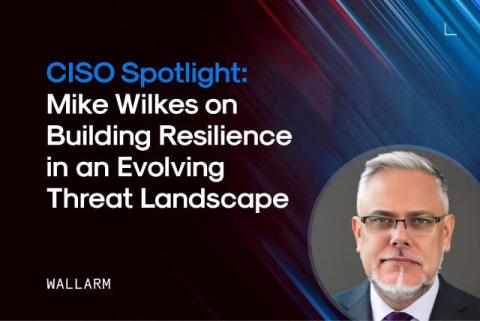
CISO Spotlight: Mike Wilkes on Building Resilience in an Evolving Threat Landscape

Mike Wilkes has had a career many cybersecurity professionals could only dream of. An adjunct professor, former CISO of Marvel and MLS, member of the World Economic Forum, drummer, and board member at the National Jazz Museum in Harlem, his interests and achievements are as eclectic as they are impressive.

Cybersecurity Audits: Are You Exposing Your Biggest Weakness? #cybersecurity #devsecops

Mend.io, formerly known as Whitesource, has over a decade of experience helping global organizations build world-class AppSec programs that reduce risk and accelerate development -– using tools built into the technologies that software and security teams already love. Our automated technology protects organizations from supply chain and malicious package attacks, vulnerabilities in open source and custom code, and open-source license risks.

Application Security Vulnerability Management: Bridging AppSec and VM for Modern Risk Reduction

Application security has evolved far beyond traditional vulnerability management (VM). Today, security teams face massive scale, increasing complexity, and a constant flow of vulnerability findings that often vanish in hybrid and cloud-native environments. We’ve moved from managing a single virtual machine to dealing with an unlimited number of containers and ECS tasks, many of which only exist for about 15 minutes.

TLS action lead time is closing: 5 practical steps to prepare for 47-day TLS certificates

Have you ever been on a tight deadline, and suddenly, your organization’s core services go dark because a TLS certificate expired without warning? It’s a nightmare scenario no team wants to face. Now, picture this happening eight times more often. Starting in 2029, every public TLS certificate will have a maximum lifespan of just 47 days. Compared to today’s 398-day validity, this represents a seismic shift in digital security practices. And the ripple effects will be hard to ignore.