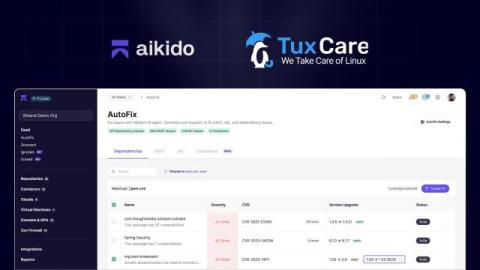
TL;DR We’ve partnered with TuxCare so you can fix vulnerabilities in legacy dependencies instantly, without rewrites or risky upgrades. Stay secure, compliant, and keep building without trade-offs. Read on for the full launch, or check out our docs to go deeper. As engineering teams scale, managing vulnerabilities in third-party libraries becomes one of the biggest blockers to shipping safely and quickly.
Most security leaders don't suddenly become "strategic" the moment they get a new title. It's a skill developed through failures, feedback, and learning how to align your work with the business's goals. On this episode of The Connectivity Cloud Podcast, Olivier Busolini opens up about his own missteps, trying to contribute from inside the tech silo, then outside of it, and still feeling ineffective?
Organizational perimeters have transformed. From IoT devices and cloud infrastructure to APIs and microservices, today’s perimeters bear little resemblance to those of even the recent past — and one result of these transformations are organizations’ vastly expanded attack surfaces. Additionally, the adoption of hybrid work has imposed new requirements and introduced new challenges that influence perimeter architecture and tooling.
CIEM vs. PAM, which one to go for? Both are cloud access management solutions, but differ in certain aspects. Where CIEM works on handling cloud entitlements, PAM focuses on securing credentials in a vault, and controlling privileged access.
Cybersecurity professionals encounter two primary categories of denial-of-service threats: traditional denial of service (DoS) and distributed denial of service (DDoS) variants. DoS attacks stem from a single system, while DDoS campaigns leverage multiple machines to overwhelm the target. The fundamental difference? Scale and coordination complexity. Both DoS and DDoS attacks are a type of malicious attempt to disrupt services.
Some of the largest financial services organizations in the world - including the top 5 banks in the US - all use JFrog to deliver applications faster, and more securely. Working closely with these top banks, trading and insurance companies has taught us a thing or two about getting DevSecOps right in these highly regulated, complex environments.
Let’s face it—cybersecurity is no longer a game of building taller walls or thicker locks. The old rules, the ones based on the idea that threats come only from outside, just don’t hold up anymore. In today’s digital world, where employees connect from anywhere, apps live in the cloud, and attackers can sit quietly inside your systems for weeks, trust has become a loaded word.