Security | Threat Detection | Cyberattacks | DevSecOps | Compliance

Sensing and blocking JavaScript SQL injection attacks

You’ve heard about JavaScript SQL injection attacks before, but you’re not entirely sure what they look like in the wild or if you need to worry about them in the first place. Maybe you’re trying to figure out just how bad it could be. In short, if you’re building apps using SQL databases, like MySQL and PostgreSQL, you’re at risk—you’re not safe from attack methods plaguing developers and their databases for decades.

User Logins for in-house Javascript JS Apps and Sites with Java Connectors

miniOrange connectors improve your Javascript apps' and sites’ security by implementing SSO, MFA, and user synchronization. With a wide range of protocol support like SAML, LDAP, and OAuth, miniOrange connectors will improve your security, effectiveness, and efficiency in your workflow. Securing Javascript applications and websites is made easier with miniOrange connectors. Timestamps: miniOrange, a trusted name in identity and access management, empowers organizations worldwide with robust, scalable, and secure solutions.

Securing Protected Health Information: A Guide to Website Compliance Using Feroot Health DataShield AI

Healthcare organizations managing multiple websites must protect Protected Health Information (PHI) while complying with HIPAA, HHS regulations, state laws, and global privacy requirements. Feroot DataShield AI provides automated monitoring and protection across distributed healthcare web environments.

Securing Payment Pages: A Complete Guide to PCI DSS 4.0.1 Compliance for SAQ A-EP Merchants

PCI DSS for e-commerce is essential for SAQ A-EP merchants who manage complex payment environments, including custom payment pages, interactive checkout flows, and third-party payment integrations. These merchants—such as SaaS platforms, online retailers, travel booking sites, and digital service providers—must comply with stringent security requirements to protect sensitive payment data.

Achieving PCI DSS 4.0.1 Compliance for Companies (SAQ A-EP): A Comprehensive Guide for Feroot PCI PaymentGuard AI

Payment security for SAQ A-EP merchants has never been more critical. As e-commerce continues to evolve, merchants who control elements of their payment pages face increasing security challenges and compliance requirements.

PCI DSS 4: Compliance Guide for SAQ A-EP Merchants to comply with Requirements 6.4.3 and 11.6.1

As an SAQ A-EP merchant, you face unique compliance challenges because you control elements of your payment page, even though you don’t directly process card data. This makes you a prime target for attacks like Magecart, which specifically target payment page scripts.

PCI DSS 4.0.1 Compliance at Scale: A Practical Guide for Payment Processors SAQ D

Guide for Payment Processors SAQ D begins with a major challenge in today’s digital payment landscape. Payment processors must secure payment pages across thousands of merchant websites, far beyond managing a single payment system. Let’s put this in perspective: Real-world example: A payment processor with 10,000 merchants needs to monitor approximately 30,000 payment pages daily. That’s 30,000 potential points of vulnerability requiring constant surveillance.

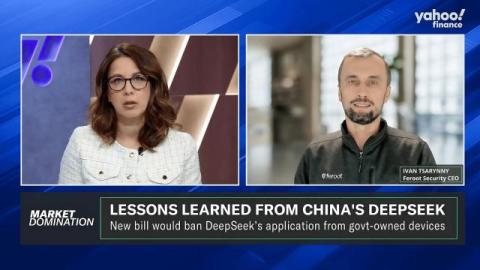
Yahoo Finance: U.S. Lawmakers Push to Ban China's DeepSeek AI Over Security Risks - Feroot Security Analysis

Washington, D.C. – U.S. lawmakers announced a bill to ban DeepSeek, the Chinese AI chatbot app, from government devices following a security analysis by Feroot Security that revealed alarming privacy and national security risks. The research suggests that DeepSeek collects user data, including digital fingerprints, login credentials, and behavioral information, potentially sending it to servers tied to the Chinese government.