Security | Threat Detection | Cyberattacks | DevSecOps | Compliance

Creating a Threat Hunting Lab in Graylog

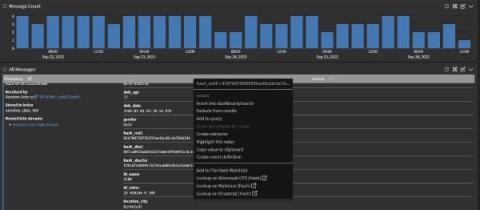
When I was looking to break into the cybersecurity industry, I found myself overwhelmed with the sheer amount of content to learn and try. So much of the content, you had to purchase certain things, or it was way too complicated for me to understand at the time. Today, I wanted to break down create an easy walk-through on how to set up a functional threat hunting lab.

Splunk Named #1 SIEM Provider in the 2022 IDC Market Share for SIEM for 3rd Time in a Row

Splunk has been named #1 SIEM Provider in the Worldwide Security Information and Event Management Market Shares, 2022: The Multitude of SIEMs (doc #US51012523, July 2023). The continued recognition from IDC as a SIEM market Leader is a testament to our commitment to delivering a data-centric, modern solution that delivers data-driven insights for full-breadth visibility for our users.

Driving the vSOC with Splunk

In 2022, a German security researcher disclosed that he had gained remote control of over 25 electric vehicles. In doing so, he was able to access numerous onboard features of these vehicles such as querying the vehicle location, disabling security features, unlocking doors, and starting the engine. The security flaw that allowed this break was not with the vehicle’s system itself, but presented by an open source companion application.

Detection Engineering Explained

Safeguarding an organization’s virtual realms has never been more important. Today, connectivity and data are the new currency. Yet, as technology advances, so do the malicious actors and their methods, constantly devising more unique and covert ways to breach defenses. Herein lies the role of detection engineering. Acting as the digital watchtower for organizations, detection engineering responds to known threats and continuously scans the horizon for the slightest hint of a potential breach.

What's IAM? Identity & Access Management Explained

Identity and Access Management (IAM) is the name for any framework of technology, policies and processes that authenticate and authorize a user in order for that user to access and consume an organization’s resources. Managing user identities and granting appropriate user access helps protect your assets. These assets can include digital access to sensitive information, intellectual property, data and application workloads, network access or perimeter access to the physical data center location.

Falcon LogScale Live Dashboards: Demo Drill Down

Monitoring security events in real-time empowers you to find stealthy threats and spot attack trends early. See how Falcon LogScale’s live dashboards provide a flexible, intuitive way to visualize your security data. You'll learn how to build a MITRE ATT&CK dashboard that automatically updates with live data.

Intrusion Prevention Systems (IPS) Explained

An Intrusion Prevention System (IPS) is a technology that can automatically detect and control security attacks, both known and unknown. The focus of this system is threat prevention — though a related technology, IDS, works to better detect threats. Let’s take look at how IPS prevents intrusions and the most common ways IPS can work.