Security | Threat Detection | Cyberattacks | DevSecOps | Compliance

Image scanning for Azure Pipelines

In this blog post, you’ll learn how to setup image scanning for Azure Pipelines using Sysdig Secure DevOps Platform. Azure DevOps gives teams tools like version control, reporting, project management, automated builds, lab management, testing, and release management. Azure Pipelines automates the execution of CI/CD tasks, like building the container images when a commit is pushed to your git repository or performing vulnerability scanning on the container image.

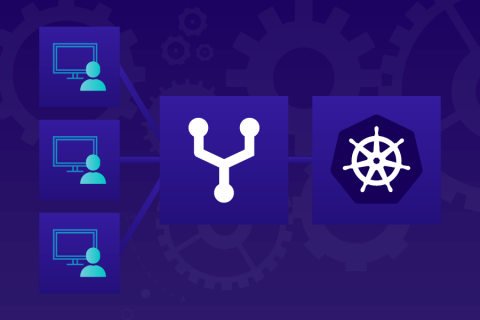
Enable GitOps for Kubernetes Security - Part 1

“How do I enable GitOps for my network policies?” That is a common question we hear from security teams. Getting started with Kubernetes is relatively simple, but moving production workloads to Kubernetes requires alignment from all stakeholders – developers, platform engineering, network engineering, security. Most security teams already have a high-level security blueprint for their data centers.

Guide to Container Security - Everything You Need to Know

Ah, the wonders of technology. In the innovation-rich Information Age, we are the beneficiaries of a nonstop wave of new advancements, each offering the ability to execute vital tasks faster and more efficiently than ever before. However, along with each breakthrough comes potential security vulnerabilities.

5 Container Security Risks Every Company Faces

Over the course of the past 10 years, traditional application development methodology (waterfall) has given way in favor of the more agile DevOps-centric methodologies focused on continuous delivery and continuous deployment. This trend was turbocharged in 2013 when Docker containers came onto the scene and ushered in the proverbial crossing of the chasm in container adoption. A recent Tripwire study revealed that 87% of surveyed organizations had containers deployed in production.

Security monitoring for managed cloud Kubernetes

Photo by chuttersnap on Unsplash Kubernetes (K8s) is an open-source system for automating deployment, scaling, and management of containerized applications. It has recently seen rapid adoption across enterprise environments. Many environments rely on managed Kubernetes services such as Google Kubernetes Engine (GKE) and Amazon Elastic Kubernetes Service (EKS) to take advantage of the benefits of both containerization and the cloud.

Teleport Overview Webinar

This is a recording of a webinar demo of Teleport by Gravitational, a privileged access management solution for securing on-premises and multi-cloud environments. In this presentation, we provided an overview of Teleport, walk through a live demonstration of popular features such as certificate authentication, SSO-integration for role-based access control (RBAC), session recording, and Kubernetes authentication and roles.

Single Sign-On for Kubernetes: Dashboard Experience

Over my last two posts (part 1 and part 2), I have investigated user authentication in Kubernetes and how to create a single sign-on experience within the Kubernetes ecosystem. So far I have explained how Open ID Connect (OIDC) works, how to get started with OIDC and how to perform a login from the command line. The final piece of this puzzle is the Kubernetes dashboard, often used by our engineers alongside kubectl.

3 Layers to Defend Your Kubernetes Workloads

Researchers at Netflix and Google recently reported a vulnerability in the HTTP/2 protocol that enables adversaries to execute a DOS attack by legitimate use of the protocol. These types of attacks are very difficult to detect and mitigate because the traffic is valid HTTP/2 traffic. While HTTP/2 is a relatively new protocol it should be noted that even after several years of hardening we still see vulnerabilities for the TCP protocol like the recently reported SACK vulnerability.