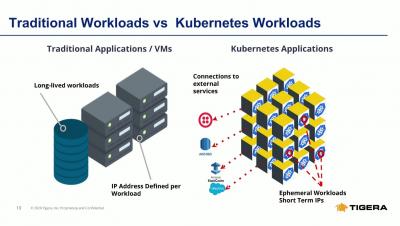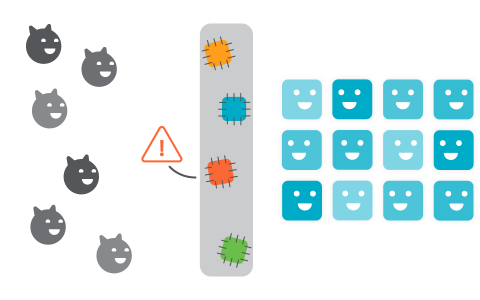
Container use continues to grow, and Kubernetes is the most widely adopted container orchestration system, managing nearly half of all container deployments.1 Successful integration of container services within the enterprise depends heavily on access to external resources such as databases, cloud services, third-party application programming interfaces (APIs), and other applications. All this egress activity must be controlled for security and compliance reasons.
Sysdig is working with VMware to deliver enhanced microservice and cloud security. Leveraging the container runtime security capabilities of Sysdig Secure along with the operations and security policies of VMware Tanzu Service Mesh, built on VMware NSX, customers will be better able to accelerate Kubernetes and cloud adoption, as well as application modernization.
2020 is predicted to be an exciting year with more organizations adopting Kubernetes than ever before. As critical workloads with sensitive data migrate to the cloud, we can expect to encounter various Advanced Persistent Threats (APT) targeting that environment.
For the impatient, in this blog post, we’ll look into the problem of preparing a Kubernetes application to be deployed into a large number of Kubernetes clusters, even if you, the developer, do not have direct access to them all. The tutorial parts of this post will utilize Gravity 7.0, which you can download here. This version is in beta at the time of publication, so be sure to select pre-releases in the dropdown on the download page to access it.
the k8s-security-configwatch GitHub Action, an open source tool from Sysdig, secures your GitOps workloads by detecting changes on your Kubernetes security configuration.
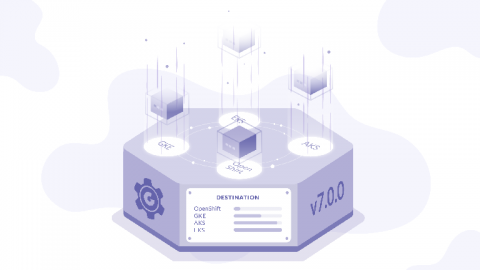
Today, we are excited to announce the release of Gravity 7.0! Gravity is a tool for developers to package multiple Kubernetes applications into an easily distributable .tar file called a “cluster image”. A cluster image contains everything an application needs and it can be used for quickly creating Kubernetes clusters pre-loaded with applications from scratch or loading applications contained within an image into an existing Kubernetes cluster like OpenShift or GKE.
We are excited to announce the general availability of Calico Enterprise 2.7. With this release, Fortinet’s 400,000 customers can use FortiGate to enforce network security policies into and out of the Kubernetes cluster as well as traffic between pods within the cluster.
It has been slightly more than a month since Catalogic released KubeDR. Since then, we have been busy adding features and making improvements to the project inspired by all the feedback we’ve received from the community. We are very excited to share all the changes that went into KubeDR since its release on January 15. In the first release, we only supported a disaster recovery scenario restore by using a separate Python utility.