Security | Threat Detection | Cyberattacks | DevSecOps | Compliance

AI-Powered SOCs, Explained

Security Operations Centers (SOCs) are the command center of an organization’s frontline cybersecurity defenses — responsible for monitoring threats, prioritizing alerts, and orchestrating remediation. However, today’s SOCs are facing an existential crisis: an overwhelming volume of increasingly complex and sophisticated threats combined with a shortage of skilled analysts.

GitLab's CISO Josh Lemos on the pros and cons of making security practices public

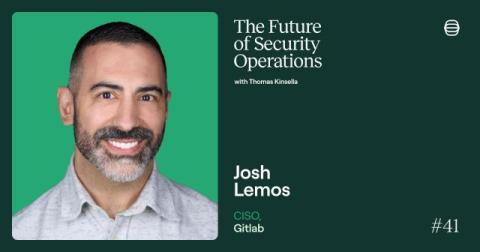
In this week’s episode of The Future of Security Operations podcast, I'm joined by Josh Lemos, CISO at GitLab. Throughout his 15-year career in security, Josh has led teams at ServiceNow, Cylance, and Square. Known for his expertise in AI-driven security strategies, Josh is also a board member with HiddenLayer. He drives innovation at GitLab with a relentless focus on offensive security, identity management, and automation. Josh and I discuss.

GitLab's CISO Josh Lemos on the pros and cons of making security practices public

In this week’s episode of The Future of Security Operations podcast, Thomas is joined by Josh Lemos, CISO at GitLab. Throughout his 15-year career in security, Josh has led teams at ServiceNow, Cylance, and Square. Known for his expertise in AI-driven security strategies, Josh is also a board member with HiddenLayer. He drives innovation at GitLab with a relentless focus on offensive security, identity management, and automation.

The end of muckwork

Muckwork is the invisible drag on every company. It’s the repetitive, manual, low-leverage work we tolerate because we assume it’s necessary. Copying data between systems. Triaging alerts. Clicking through approvals. Tasks that keep things running but slow everything down. In 2006, Jeff Bezos called the backend plumbing of web apps “muck.” AWS was created to eliminate it. Today, the same kind of work is everywhere in the enterprise. We call it muckwork.