Security | Threat Detection | Cyberattacks | DevSecOps | Compliance

Three SOC Threats Solved in Minutes with Torq Hyperautomation

Your SOC exists for one core reason: to rapidly reduce the mean time to detect, investigate, and respond to threats. The more efficiently your team operates, the faster you reduce essential KPIs like MTTR, MTTD, MTTI, and what we call ‘MTTx’ (mean time to anything). Ask our Field CISO, Patrick Orzechowski (PO), and he’ll tell you straight: If your SOC isn’t relentlessly focused on reducing risk through speed, you’re falling behind. Talking about efficiency is easy.

CISOs' Unconventional Criteria for Evaluating AI SOC Analysts

Noam Cohen is a serial entrepreneur building seriously cool data and AI companies since 2018. Noam’s insights are informed by a unique combination of data, product, and AI expertise — with a background that includes winning the Israel Defense Prize for his work in leveraging data to predict terror attacks. As the Head of Artificial Intelligence at Torq, Noam is helping build truly next-gen AI capabilities into Torq’s autonomous SOC platform.

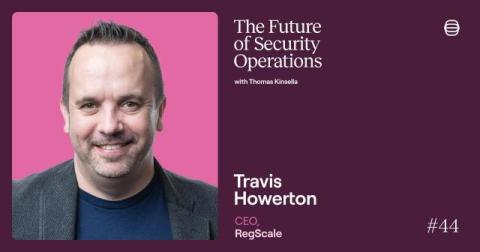
RegScale's Travis Howerton on taking the pain out of compliance in highly-regulated industries

In this week’s episode of The Future of Security Operations podcast, I'm joined by Travis Howerton, Co-founder and CEO of RegScale. Travis began his security career with roles at government and regulated organizations, including the National Nuclear Security Administration and Oak Ridge National Laboratory, before being inspired by inefficiencies in compliance processes to co-found RegScale.

RegScale's Travis Howerton on taking the pain out of compliance in highly-regulated industries

In this week’s episode of The Future of Security Operations podcast, Thomas is joined by Travis Howerton, Co-founder and CEO of RegScale. Travis began his security career with roles at government and regulated organizations, including the National Nuclear Security Administration and Oak Ridge National Laboratory, before being inspired by inefficiencies in compliance processes to co-found RegScale.

Introducing Modern SecOps, a more realistic alternative to the "autonomous SOC"

I’ve always had a love-hate relationship with traditional SOC. Many SOC teams do great work within this structure. But there are also serious issues with the three-tier model - it’s rigid, costly, and unsustainable for any company that isn’t a large enterprise. In the push to address these limitations, the concept of an “autonomous SOC” has emerged, with some vendors already claiming to offer fully autonomous solutions.