Security | Threat Detection | Cyberattacks | DevSecOps | Compliance

The latest News and Information on Security Incident and Event Management.

How to overcome data gravity and accelerate AI security in the SOC

Security teams ingest massive volumes of telemetry from endpoints, cloud workloads, identity providers, and network controls. The goal is faster threat detection and shorter incident response times. But the reality is that all of this data becomes harder to move, slower to query, and messier to analyze as it grows. That's data gravity, and it's the biggest barrier to effective AI in cybersecurity.

Where Should Humans Sit in AI-Driven Cybersecurity?

There is a huge amount of excitement right now about AI and security operations. Across the industry, we are seeing rapid innovation in areas such as behavioural analytics, AI-assisted investigation, and increasingly agent-based capabilities designed to help security teams process large volumes of activity more effectively. Security teams need that help. The scale of alerts, identities, and telemetry they must manage today has grown far beyond what humans alone can realistically handle.

Protecting critical infrastructure in the AI era: It starts with data

In the public sector, it’s not uncommon for disruptions of critical infrastructure to ripple outward and wreak major havoc on systems and communities whether the cause is a technical issue, a natural disaster, or a cyber attack. As critical infrastructure becomes more connected through distributed systems and IoT devices, the attack surface continues to expand.

Graylog Recognized by Users in the 2026 Gartner SIEM VOC

Analyst reports tell you what vendors do. Peer reviews tell you whether it actually works. The Gartner Peer Insights Voice of the Customer for SIEM is built on verified reviews from real security and IT practitioners who bought, deployed, and operated the platforms they rated. No vendor involvement in the scoring. No pay-to-play placement. Just practitioners saying what worked and what did not. Graylog was included in the 2026 edition of that report. Here’s what our users said.

How digital banking is redefining fraud prevention

The banking industry stands at a critical intersection of technology, security, and customer experience. As financial institutions navigate massive data volumes and increasingly sophisticated threats, they’re also trying to survive the digital transformation that’s made customer expectations higher than ever and trust more fragile than before.

15 Risky Cloud Misconfigurations and How To Mitigate Them

When people start driving, one of the first things they learn is how to set the rear-view and side-view mirrors. Whether driving locally or on the highway, these mirror configurations reduce accident risk because they improve the driver’s visibility into the cars behind and around them. In the cloud, various technical configurations act similarly.

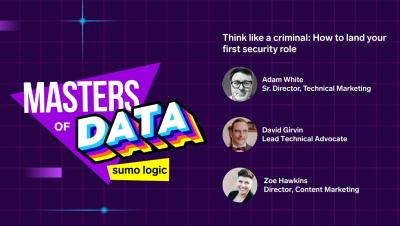
Ep 44: You can't vibe code your way through a production outage

In this episode of Masters of Data, we tackle one of tech's buzziest debates: vibe coding versus production-ready software. We break down where AI-assisted "just make it work" coding genuinely shines (think POCs, prototypes, and getting stakeholder buy-in fast) and where it falls dangerously short when someone tries to ship it to ten thousand enterprise users. We also dig into David's agentic engineering workflow, security risks like malicious MCP servers and supply chain attacks, and why turning a vibe-coded prototype into real software still takes months, not days. Bottom line.

Stopping the Agentic Breach: How to Operationalize Your Defense Against Mythos-Speed Attacks

The industry has spent the past few weeks focused on Claude Mythos Preview and the rise of autonomous offensive AI. As outlined in Claude Mythos, Project Glasswing, and the Machine-Speed Security Race, this shift is not only about faster attacks. The same AI-driven acceleration that helps attackers discover weaknesses faster can also help defenders validate exposure sooner. For security operations teams, the challenge is turning that strategic shift into action.

Unified ITOps + Security Platforms: 10 Tools Closing the Gap

Most MSPs run IT operations and security on two separate stacks. That means two consoles, two data sets, and one endpoint that both teams fight over. The 2026 buying shift is toward a single platform that does both, and the vendor landscape has reorganized around it.

Before you replace your SIEM: AI-driven security requires operational context, not just centralized data

Artificial intelligence is rapidly reshaping how security operations centers (SOCs) function. Many organizations are now evaluating AI-native architectures to reduce workload and accelerate investigations. A new architectural narrative is emerging. A growing set of AI-native security vendors are proposing centralizing telemetry in a warehouse and deploying AI agents to replace the operational role of the SIEM. They want to centralize telemetry, apply AI, and automate the SOC.