No Time to Drift: How AI Is Changing the Way Security Teams Manage Configuration Drift

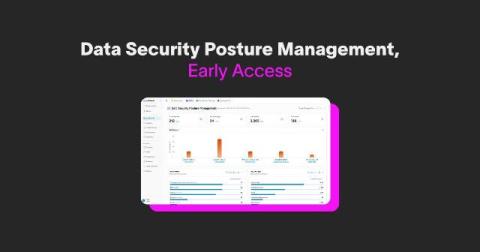
In this episode of No Time to Drift, Reach CEO Garrett Hamilton sits down with Sebastian Goodwin (Chief Trust Officer at Autodesk), John Rasmussen (Senior Analyst at TAG Infosphere, former CISO at Syneos Health), and Ed Amoroso (CEO, TAG Infosphere) to unpack one of security’s most persistent challenges — configuration drift. They explore why drift happens quietly, how it compounds into real risk, and how AI-driven automation is helping teams detect, manage, and prevent drift faster — without losing human oversight or control.
Trust Centers for Compliance: HIPAA, PCI DSS & SOC 2 Made Simple

Organizations in regulated industries must comply with strict guidelines that require continuous security measures and data protection protocols to be in place. Maintaining compliance in trust centers is becoming essential, as these organizations must demonstrate compliance with industry-specific regulations across their business relationships with clients and partners, as well as during audits. Trust centers for compliance metrics as a key framework for regulated companies to show compliance at scale.

How to Prevent Backup-related Throttling Without Losing Data (or Mind)

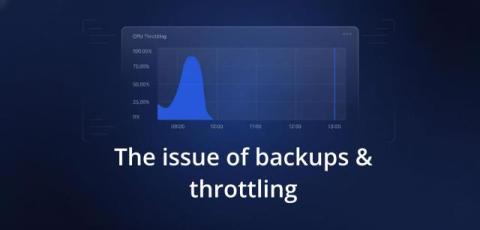
Consider that your backup is running smoothly. Your dashboards are green. The DevOps team is sleeping peacefully. And yet, behind the calm surface, something is happening. Your API limits are being chewed up, call by call, until you’re throttled into silence. Suddenly, your system stalls – quietly and invisibly. The irony is, you build a backup system for resilience. Now, it’s the vulnerability. There’s a quiet assumption built into most backup systems.

Everything Runs on Software, But Most of It Isn't Secure

Our economy, healthcare, energy, and even water systems are powered by software. But here’s the hard truth is that most of that software is built insecurely. And that’s why cyberattacks keep growing in scale and impact. When code underpins everything we rely on, every flaw becomes a national risk.

What Is an IP Stresser? How These DDoS Tools Work and How to Stay Protected

The world is digitally connected, and businesses are running online around the clock. They can’t afford even a few minutes of downtime because it can damage their reputation and revenue. But cybercriminals are constantly looking for ways to disrupt services. Among many methods, IP stressers appear quite often in security reports. On the surface, it may sound like a harmless ‘load-testing tool’ to check a network’s strength.

Scattered LAPSUS$ Hunters: Anatomy of a Federated Cybercriminal Brand

Trustwave SpiderLabs’ Cyber Threat Intelligence team is tracking the recent emergence of what appears to be the consolidation of three well-known threat groups into a “federated alliance” that offers, among its activities, Extortion-as-a-Service (EaaS). The collective comprises Scattered Spider, ShinyHunters, and LAPSUS$.

What is Vulnerability Management Lifecycle? Different Stages and Best Practices

Do you know what’s common between downtime, data leaks, and compliance-related penalties? An issue known as an unpatched vulnerability. Tracking and managing system weaknesses is no longer a one-time task. It’s a full-time responsibility now because of the rise of cloud, IoT, and remote endpoints. To stay ahead of potential breaches, follow a continuous and methodical approach known as the vulnerability management lifecycle.

Secure by Design, Secure by Default, Secure by Demand: The Signs of a Secure Software Supply Chain

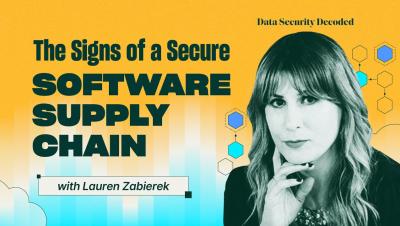
Welcome to Data Security Decoded. Join host Caleb Tolin in conversation with Lauren Zabierek, Senior Vice President for the Future of Digital Security at the Institute for Security and Technology. A former CISA leader and long-time national security professional, Lauren unpacks the principles of Secure by Design, Secure by Default, and Secure by Demand and how these frameworks are reshaping the software supply chain.

CyberArk Secure AI Agents: A closer look at new solution capabilities

We are excited to announce the launch of CyberArk’s new solution for securing AI agents, which will be generally available at the end of December 2025. CyberArk Secure AI Agents will extend CyberArk’s Identity Security Platform (ISP), which is a leading solution for securing human and machine identities.