Security Visionaries | Agentic AI Threats: Hype or Reality

Are agentic AI threats just hype or reality? Security Visionaries host Max Havey digs into the world of agentic AI-enabled threats and cyber espionage with guests Neil Thacker, Global Privacy and Data Protection Officer at Netskope, and Ray Canzanese, Head of Netskope Threat Labs. IN THIS EPISODE.

Securonix Threat Labs Monthly Intelligence Insights - November 2025

The Monthly Intelligence Insights report provides a summary of top threats curated, monitored, and analyzed by Securonix Threat Labs in November 2025. The report also includes a synopsis of the threats, indicators of compromise (IoCs), tactics, techniques, and procedures (TTPs), and related tags. Each threat has a comprehensive summary from Threat Labs and search queries from the Threat Research team.

Phishing Campaign Targets Executives With Phony Awards

A phishing campaign is targeting executives with phony offers for awards, according to researchers at Trustwave SpiderLabs. The attackers first dupe the victims into handing over their credentials, then use the ClickFix social engineering technique to trick them into installing malware. “The campaign uses a high-value executive recognition lure, ‘Cartier Recognition Program,’ to target executives,” the researchers write.

Introducing WatchGuard's Zero Trust Bundle: Zero Trust for the Way You Work

Hybrid work, cloud apps, and constant connectivity have completely reshaped how people get things done. But they've also reshaped how attackers operate. Today, most breaches begin with fundamental issues: stolen credentials, compromised devices, or remote access tools that weren't designed for a world of distributed users. That's why WatchGuard is introducing the Zero Trust Bundle, a unified approach that secures people, devices, and access decisions every time someone connects to your business.

How Cyberhaven Uses Data Lineage to Revolutionize DLP

The concept of data loss prevention (DLP) is simple: stop sensitive information from leaving your organization through unauthorized channels. But in practice, traditional DLP solutions struggle to deliver on that promise. They rely on rigid rules, limited visibility, and a shallow understanding of how data is actually used. The result is missed threats, noisy alerts, and frustrated security teams.

Finding the Best AI Governance Software for Enterprises

‍ ‍AI governance software provides GRC leaders and security and risk managers (SRMs) with a dependable way to understand how AI is being used across the business and whether safeguards are functioning as intended. The software can translate a complex ecosystem of tools and models into concrete insights that stakeholders can evaluate.

How to detect React2Shell attacks using network-based threat hunting

How do you find React2Shell vulnerabilities or detect React2Shell attacks in real environments? In this video, Corelight cloud security researcher David Burkett walks through how to threat hunt React2Shell by focusing on post-exploitation behavior at the network level. Instead of relying on exploit signatures, the approach uses application baselining and network traffic analysis to identify abnormal behavior.

Troubleshooting Cilium network policies: Four common pitfalls

Cilium network policies (CNPs) extend Kubernetes’ L3/L4 controls to the application layer (L7). CNPs provide teams with advanced networking capabilities, but they can also introduce new ways for connectivity to fail, especially in environments running thousands of workloads. Many of these issues stem from differences in how Kubernetes and Cilium interpret the same concepts, such as label scoping, IP-based rules, service identities, and how default-deny behavior is applied.

New Attack Technique "ConsentFix" Hijacks OAuth Consent Grants

On December 11, 2025, Push Security published research detailing a newly observed browser-based phishing technique called ConsentFix. The name ConsentFix is derived from its similarity to the previously documented ClickFix technique using fake CAPTCHA pages. ConsentFix, enables threat actors to gain cloud account access without capturing passwords, multifactor authentication (MFA) codes, or other credentials by abusing legitimate OAuth authentication and consent flows.

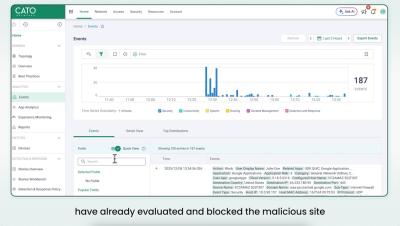
Phish No More: Instant Defense with Cato SASE

Phishing remains one of the most common ways attackers try to breach enterprise environments. Traditional tools often detect these attempts too late, giving attackers time to gain a foothold. In this demo, you’ll see how the Cato SASE Cloud Platform stops phishing attempts in real time. Cato inspects every click, evaluates threats instantly, and blocks malicious sites before they load, without slowing users down.