2025 Data Security Insights and Resources to Prepare for 2026

Data security in 2025 was less about reacting to breaches and more about surviving in a world where data is everywhere, attackers are faster, and trust is fragile. While the core goal of protecting sensitive information hasn’t changed, how organizations approach security has evolved significantly.


Third-Party Risk Management: Best Practices and Trends

In the quiet corners of the darknet, threat actors aren’t always looking for a way to break through your front door. Instead, they’re hunting for the “side door”—the niche cloud provider you use for analytics, the marketing firm with access to your customer data, or the logistics partner with a direct line into your ERP. As we move into 2026, Third-Party Risk Management(TPRM) has evolved from a periodic compliance exercise into a high-stakes game of digital chess.

New ConsentFix Technique Tricks Users Into Handing Over OAuth Tokens

Researchers at Push Security have observed a new variant of the ClickFix attack that combines “OAuth consent phishing with a ClickFix-style user prompt that leads to account compromise.” The technique, which the researchers call “ConsentFix,” tricks victims into copying and pasting a localhost URL containing an authorization token, then pasting it into a phishing page.

Fraud Team Postmortems and Account Takeover Prevention

Fraud analysts know the pattern too well. After an account takeover incident, the postmortem confirms what happened. A stolen credential was used. A bot executed a replay. A mule account attempted a transfer. Yet the origin of the compromise remains unclear. The postmortem becomes an autopsy on a loss that already occurred. The core issue is the Window of Exposure.

What Happens When Outdated App Versions Circulate Unnoticed? How to Regain Control?

Most teams assume that once an update is released, the old version quietly disappears. But mobile distribution doesn’t work that way. Some app stores delay syncing updates. Others keep older APKs accessible. Third-party sites mirror binaries and never refresh them. Certain regions continue serving outdated versions weeks after security fixes go live.

Supervised AI Is the Fastest Path to Better Threat Triage ROI

Security operations teams are under sustained pressure. Alert volumes continue to rise, environments grow more distributed, and experienced analysts remain scarce. Much of the industry conversation around AI focuses on autonomy and fully automated response. That focus skips the most reliable efficiency gains available right now.

The CISO's Take: Navigating Cyber Risk in Financial Services

“If you are solving problems at human speed, you are at a huge disadvantage, because your attackers are operating at machine speed.” As cyber risk – in both the financial services sector and more broadly – accelerates at the pace of automation and AI, securing our future requires practitioners to be more strategic than the threat actors after our assets.

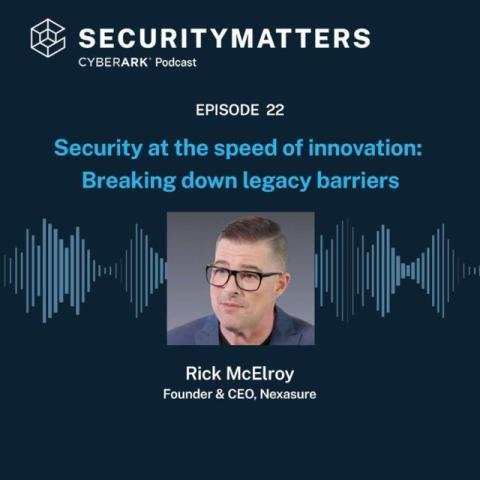
EP 22 - Security at the speed of innovation: Breaking down legacy barriers

How are defenders supposed to keep up when attackers move at the speed of AI? In this episode of Security Matters, host David Puner welcomes Rick McElroy, founder and CEO of Nexasure, for a candid conversation about cybersecurity’s breaking point. Together, they unpack the realities of defending organizations in an era of identity sprawl, machine risk, agentic AI, and relentless automation.

API Security in the Education Sector: Protecting the Digital Learning Ecosystem

Recent research shows that the education sector now faces over 4,300 cyberattacks per week per organization, a 41% year-on-year increase. Education also consistently ranks among the top three most targeted industries globally, driven by the volume of sensitive student data and heavy reliance on cloud-based learning systems.