Work From Home Solution: Zscaler
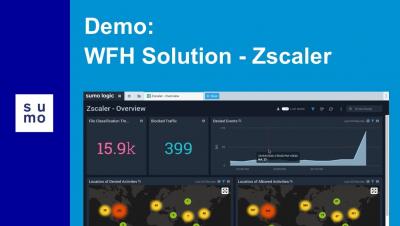
This video shows you how the Sumo Logic App for the Zscaler dashboards provide easy-to-access visual insights into web traffic behaviors, security, user browsing activities, and risk.

In the new normal, if your business has chosen remote operations, this might attract malicious actors. Hackers prey on the remote workforce whose vulnerability has increased in multifold ways. While infrastructural concerns, such as working outside the corporate IT network and using home Wi-Fi are inevitable, other issues, including using personal devices and retaining privileges to access more than required business resources add to the magnitude of this vulnerability.
A recent attack on a hospital in Brno, Czech Republic (a COVID-19 testing center)ehowed the extent to which weaknesses in a health center’s cybersecurity system can endanger the lives of patients. During this attack, patients had to be redirected to other hospitals and vital surgeries were postponed - all during a time in which vital testing needed to be carried out and releases needed to be sped up. A study published in the journal Technological Health Care by CS Kruse et al.
This new world is putting a strain on organizations’ digital security defenses. First, malicious actors are increasingly leveraging coronavirus 2019 (COVID-19) as a theme to target organizations and to prey upon the fears of their employees. Our weekly COVID-19 scam roundups have made this reality clear. Second, organizations are working to mitigate the risks associated with suddenly having a large remote workforce.
We all know about hacking and hackers, but what about hacktivism and hacktivists? In this article, we will discuss what hacktivism is and how it can affect your organization. Hackers and the act of hacking found their way into mainstream long ago, with the help of high budget films and our increasing use of technology in almost every aspect of our lives. That is why almost everyone knows what hacking is and who a hacker is.