CCPA compliance: Getting ready for enforcement

With enforcement of the California Consumer Privacy Act (CCPA) set for July 1, 2020, it is time for organizations to ensure their compliance strategy is in place. With the CCPA already in effect since January 2020, regulators expect the companies to be CCPA compliant now. The CCPA requires organizations to secure the sensitive data they hold, while also protecting the privacy of consumers.


Data Privacy in 2020

Data breaches are at an all-time high, with all evidence pointing to increased data exposure. Naturally, organizations are turning to employee monitoring, insider threat detection and data loss prevention technologies to protect themselves. There is, however, some concern that these solutions may create a potential conflict with employee and consumer privacy rights. Especially, with the introduction of GDPR, CCPA and other similar laws at various stages of processing, companies around the world are being forced take a closer look at their data governance and privacy policies.

What to Expect from Brazil's New Data Protection Law

The European GDPR (General Data Protection Regulation) is one of the most influential consumer privacy laws that has affected 500,000 companies throughout the world. This law has played a crucial role in formulating another substantial privacy law known as the California Consumer Privacy Act that came into effect on January 1, 2020.

GDPR 2 years on - key takeaways and lessons learnt

GDPR recently breezed past its second birthday and, like many two-year-olds, continues to cause concern and confusion for those who have to deal with it. Unlike real two-year-olds, however, GDPR is quite clear in what it demands and there could be big consequences if they are not met. For businesses, failure to meet GDPR’s requirements represents an increased risk of data breaches and the reputational damage and legal repercussions that breaches inevitably lead to.

The Path of an Outlaw, a Shellbot Campaign

The ability of an actor to remain undiscovered or obfuscating its doings when driving a malicious campaign usually affects the gains of such campaigns. These gains can be measured in different items such as time to allow completion of operations (exfiltration, movement of compromised data), ability to remain operative before take down notices are issued, or ability to obtain gains based on for-profit driven crimeware (DDoS for hire, Crypto mining).

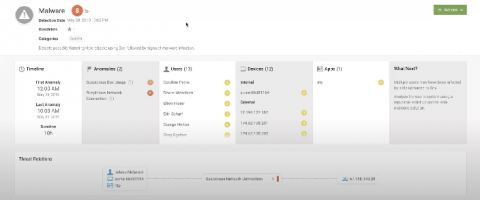
Detecting Malware and Watering Hole Attacks with Splunk UBA

You may be surprised to learn that a particular malware is responsible for data theft in over 20% of financial institutions and other verticals in 2019. Watering hole attacks involve a web server that hosts files or applications where the website or files on the site become weaponized with malware. While recent news cycles have shined a spotlight on ransomware and crimeware, malware is not a new concept.

Protect Your AWS Infrastructure with GuardDuty and Coralogix

Cloud environments like AWS can be a challenge for security monitoring services to operate in since assets tend to dynamically appear and disappear. Making matters more challenging, some asset identifiers that are stable in traditional IT environments like IP addresses are less reliable due to their transient behavior in a cloud service like AWS. Amazon GuardDuty protects your AWS environment with intelligent threat detection and continuous monitoring.

HIPAA in the time of Covid-19

The global cases of Novel Coronavirus are continually ticking upward in most parts of the world, and with every new case come further questions about the patients. Hospitals, governments and even general population is interested to know who the affected people are, what their health history is, which locations they visited, and who they interacted with prior to receiving positive test results.

How to use Kibana effectively. Today: Detect possible frauds in your data

Kibana is quite powerful and versatile for visualizing data in Elasticsearch. The Elastic Stack can be used for a variety of use cases. One is the detection of frauds e.g. in Banking transaction like within Softbank Payment Service or bonus point accounts like within Miles and More. Other areas are insurance or tax return data.