Moltworker (for OpenClaw) & Markdown for Agents: Running AI on Cloudflare

Celso explains how Markdown for Agents was conceived, built, and shipped in just one week, why AI systems prefer markdown over HTML, and how converting a typical blog post from 16,000 HTML tokens to roughly 3,000 markdown tokens can reduce cost, improve speed, and increase accuracy for AI models. We also explore Moltworker, a proof-of-concept showing how a personal AI agent originally designed to run on a Mac Mini can instead run on Cloudflare’s global network using Workers, R2, Browser Rendering, AI Gateway, and Zero Trust.

OpenClaw Security Checklist for CISOs: Securing the New Agent Attack Surface

OpenClaw exposes a fundamental misalignment between how traditional enterprise security is designed and how AI agents actually operate. As an AI agent assistant, OpenClaw operates with human permissions, executes actions autonomously, and processes untrusted content as input, all while sitting outside the visibility of conventional security tools.

Real-Time Cloud Detection & Response (CDR)

As adversaries accelerate with GenAI and blend into legitimate cloud activity, real-time correlation between telemetry and control plane events is critical. Without it, investigations stall and visibility gaps grow. CrowdStrike delivers real-time detections and automated cloud-native response to stop adversaries in seconds. Subscribe and Stay Updated.

A Real Life Encounter with Cybercriminals

A street level story follows carders feeding bag after bag of cloned credit cards into cash machines, throwing each dead card into a case and moving on to the next ATM. The scene captures how industrialised fraud looks in practice and how exposure to that behaviour pulls people toward a career in security. ⸻ For more information about us or if you have any questions you would like us to discuss email podcast@razorthorn.com. We give our clients a personalised, integrated approach to information security, driven by our belief in quality and discretion..

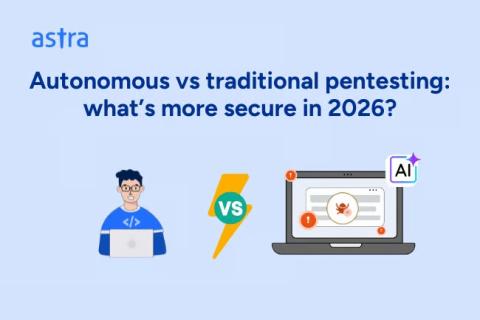
Autonomous vs Traditional Pentesting: What's More Secure in 2026?

In 2026, the attack surface isn’t just digital anymore; it’s AI-native. Attackers deploy automated exploits much faster, while most security teams still run pentests annually. And this leads to a relentless increase in security gaps. Traditional pentesting brings depth but takes time, autonomous pentesting moves fast but misses logic flaws that cause real breaches. Relying on one approach is like defending your business security with either walls or guards, never both.

Why Every Website Needs a Reliable URL Checker

Links are the connective tissue of the web. They guide users to content, help search engines understand structure and distribute authority across pages. When links fail, everything from user trust to search visibility can suffer. This is where a URL checker becomes essential. A URL checker is more than a quick "does this page load?" tool. At its most basic level, it confirms whether a URL resolves successfully. At a deeper level, it reveals status codes, redirect chains, DNS issues and server errors that aren't obvious from simply clicking a link.

Interview with a Threat Hunter: Brody Nisbet, Sr. Director of CrowdStrike OverWatch

Threat hunting is hard to define, but Brody Nisbet, Sr. Director of CrowdStrike OverWatch, breaks down the basics in an episode that starts with the CrowdStrike OverWatch mission and dives into his stories from the front lines of threat hunting.

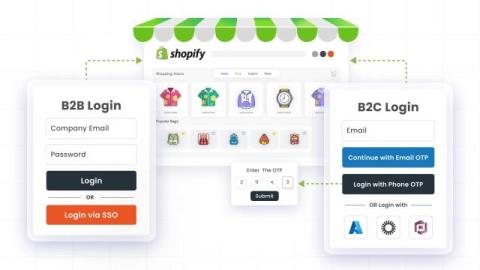
How to Implement Separate B2B and B2C Login & Onboarding in Shopify

Shopify stores are evolving beyond simple retail operations. What once was a primarily consumer-focused platform is now powering complex B2B experiences with tiered pricing, customer groups, and negotiated catalogs catering multiple B2B vendors and companies. However, as stores diversify their audiences, authentication becomes a critical pain point. A login flow designed for retail customers might be fast and convenient.

A Match Made in Heaven: How Valentine's Day Fuels Seasonal Phishing Attacks

Valentine’s Day runs on emotion. Surprise, urgency, curiosity, trust, love. For threat actors, that combination is hard to beat. Every year in mid-February, security teams see the same pattern. Phishing campaigns pick up. Brand impersonation increases. Fraud attempts follow close behind. It is not because attackers suddenly developed new techniques.