Over the last year and a half, we all went through the monumental disruption of having just about everyone work from remote locations. We strained VPN infrastructure and out of necessity split tunnels became the norm, not the exception. Even if it meant the users were a bit more exposed, you really had no choice, as Zoom/Webex/Teams meetings can eat up bandwidth like nobody’s business. But now the users are starting to come back into the office, what’s the big deal?
As more companies migrate to the cloud, the way that companies protect data changes as well. In a traditional on-premises network architecture, companies were able to follow the “trust but verify” philosophy. However, protecting cloud data needs to take the “never trust always verify” approach. Understanding what a Zero Trust Architecture is and how to implement one can help enhance security.
In my previous post, I disclosed that SonicWall had quietly released vulnerability fixes over the course of several days before vulnerability advisories were published for CVE-2020-5135. Rather than properly fixing CVE-2020-5135, SonicWall’s fix introduced a new vulnerability in the same code. SonicWall was aware of the new vulnerability but deferred the small fix until the next release, more than 6 months later.
Kroll experts have noticed an increase in distributed denial of service (DDoS) attacks by cybercriminals seeking to turn a profit in two distinct incident types. First, many ransomware operators are now threatening and conducting DDoS attacks as an additional pressure tactic during the ransom negotiation process. Second, also known as ransom denial of service (RDoS), attackers threaten DDoS attacks that will take down an organization’s public-facing services unless a ransom is paid.
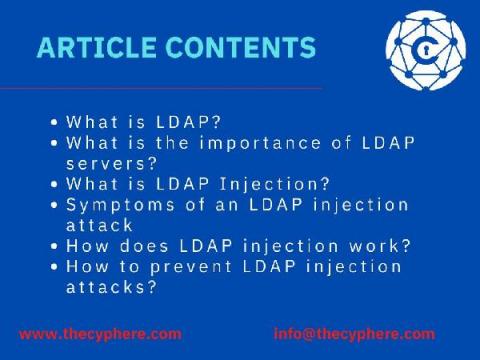
LDAP is a way for organisations to store user credentials and use them later. It provides access control as well as mechanisms to read and modify data. If the LDAP server isn’t properly configured or secured with another layer of protection, then it could be vulnerable to an attack called LDAP injection. However, you can only protect your applications if you: 1) know what LDAP is and 2) understand what can go wrong with it.
Modern drug discovery and clinical trials produce a volume of data that can quickly overwhelm local storage and bandwidth capacity. Sequencing data, scanned source files, biostatistical (SAS, R, SPSS) databases, and DICOM imaging are all hard to store and collaborate on, especially with a distributed workforce. Egnyte’s platform has been facilitating secure sharing of files for over a decade, accelerating the ability to collaborate without sacrificing security.
Our latest State of Software Security: Open Source Edition report just dropped, and developers will want to take note of the findings. After studying 13 million scans of over 86,000 repositories, the report sheds light on the state of security around open source libraries – and what you can do to improve it. The key takeaway? Open source libraries are a part of pretty much all software today, enabling developers to work faster and smarter, but they’re not static.