Can you recall exactly how good or bad your vision was following your last eye exam? Most of us can’t. A casual poll around the office showed that many people focus only on whether our eye doctor says we need an updated prescription for glasses or contacts. Often, we walk away with a new script but without a clear understanding of our overall eye health, i.e., whether our eyesight got better or worse since the previous visit.
Today, corporate and business networks have drastically evolved — our data spans multiple locations, cloud vendors, and a growing number of endpoints. Traditional security, once reliant on protecting organizations from the perimeter and trusting devices inside the network, has become less effective. Adding to the complexity, the work from home (WFH) model is being embraced by many organizations as they adapt to a rapidly shifting business climate.
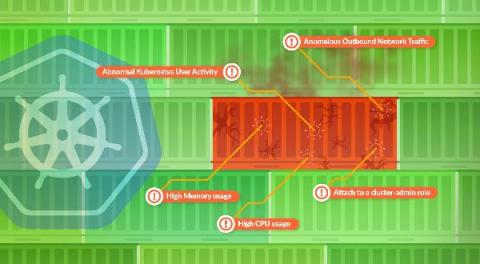
In this blog, you will learn how monitoring data from your Kubernetes environments can be used to detect indicators of a compromise in Kubernetes. Securing Kubernetes is challenging: Configuration flexibility, large clusters, ephemeral containers, and an ever-growing services ecosystem produce complex environments that open up your attack surface. Adversaries get an advantage because complexity is a natural enemy of security.
This year’s RSA Conference was certainly a surprising one. There was an understandable focus, of course, on remote working security, alongside a relatively high number of presentations dealing with the issues of the moment – Kubernetes, the IoT, and the Biden administration’s plans for cybersecurity. In the midst of these headline presentations, it was easy to miss some of the less dramatic research, and even easier to miss its implications.