Four Ways to Secure Identities as Privilege Evolves

Any user can become privileged in certain conditions. This includes everyday employees using business applications in which they can access - and take actions with - the resources attackers aim to exploit. And whether you're a CIO or a PAM admin, you likely see this evolution of privilege occurring regularly. Protecting your users' identities - from securing authentication to granting, certifying and revoking access - is essential. But it's not easy, as the users and apps requiring protection grow in number and scope. So how can your team rise to this challenge?
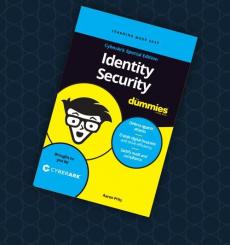
Identity Security for Dummies

With perimeter-focused architectures quickly becoming irrelevant, enterprises are looking toward identity-focused security measures to protect new "perimeterless" networks and new forms of working. Identity Security for Dummies is a primer on securing digital identities across the enterprise. This conversational book is written for technical and business stakeholders alike with plenty of examples, analogies and elements designed to make this security topic more approachable.

WatchGuard's XDR Solution, ThreatSync, Simplifies Cybersecurity for Incident Responders

ThreatSync enables a comprehensive and simple-to-use XDR solution as part of WatchGuard's Unified Security Platform, accelerating cross-product detections and faster responses to threats from a single pane of glass.

XDR: what is it, how does it work and how do MSPs use it?

We have been talking about eXtended Detection and Response (XDR) for some years now, but despite being a buzzword in the industry, a fundamental question remains: what are we really talking about here? According to Gartner, which first defined the term in 2020, XDR is a vendor-specific threat detection and incident response tool that natively integrates multiple security products into a cohesive security operations system.

One Year of Cyberwarfare: Russia-Ukraine Conflict

While things can sometimes seem “back to normal” in the rest of the world, the devastating war is still going on in Ukraine, affecting millions of innocent civilians. Reflecting on the past year’s suffering of the Ukrainian people, we’d like to summarize the cyber warfare aspect of this conflict. In 2022, Russian government-backed cyberattacks targeted users in Ukraine more than any other country.

ibm x-force threat intelligence index Breakdown

IBM have just released their coveted X-Force Threat Intelligence Index 2023 report, tracking new, existing and evolving threat insights, discovered over the last year. This in-depth, 58-page report explores threat actor’s exploitation of the after-effects of a global pandemic, and the turmoil caused by conflict between Russia and Ukraine, as IBM states “creating exactly the kind of chaos in which cybercriminals thrive. And thrive they did.”.

Traveling with OAuth - Account Takeover on Booking.com

OAuth (Open Authorization) is a modern, open authorization standard designed to allow cross-application access delegation – for example, allowing your application to read data from your Facebook profile. Combined with the proper extensions, OAuth can also be used for authentication – for example, to log into your application using Google credentials. Since its first introduction in 2006, OAuth has gained tremendous popularity.

February Cyber Roundup

The Dutch Police have arrested three individuals for suspected ransomware activity, which generated at least 2.5M Euro in extortion fees. The actors are believed to have attacked thousands of organizations, compromising the data of tens of millions of individuals. This is another example of successful law enforcement activity against ransomware operations. Such activity has increased over the past year, leading to the arrest of several prominent ransomware group members, such as Revil and Netwalker.

Persistence Techniques That Persist

Once threat actors gain a foothold on a system, they must implement techniques to maintain that access, even in the event of restarts, updates in credentials or any other type of change that might disrupt access. These techniques are collectively known as persistence techniques. In this blog post, we will focus on how malware can achieve persistence by abusing the Windows Registry.