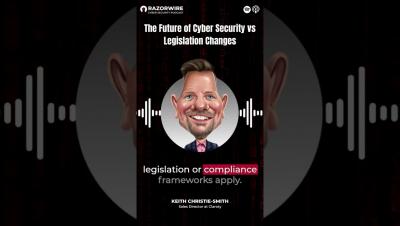
The Need for More Cybersecurity Legislation

In this video, Keith Christie-Smith shares his opinion on the current state of cybersecurity legislation and why he believes that more legislation is necessary. He argues that there are still many verticals where more legislation is needed and that organizations should be mandated to apply the most stringent cybersecurity policies and frameworks available. He also discusses the importance of organizations doing as much as possible from a cybersecurity perspective to protect themselves and their clients.

Everything you might have missed during Security Week 2023

Security Week 2023 is officially in the books. In our welcome post last Saturday, I talked about Cloudflare’s years-long evolution from protecting websites, to protecting applications, to protecting people. Our goal this week was to help our customers solve a broader range of problems, reduce external points of vulnerability, and make their jobs easier. We announced 34 new tools and integrations that will do just that.

Leverage IP and CIDR IOBs with SecLytics Cloud Threat Exchange Plugin

The Netskope Security team is happy to announce the official release of our newest Cloud Threat Exchange plugin built in-house, which now allows users to pull threat data discovered by SecLytics. This integration leverages the SecLytics Bulk API to allow users to pull identified URL, IP, and CIDR block indicators of behavior (IoBs) into Cloud Exchange.

Securing the digital future: Reviewing the Biden-Harris administration's National Cybersecurity Strategy

On March 2nd, 2023, the Biden-Harris Administration released a fact sheet announcing the National Cybersecurity Strategy, which outlines their vision for securing the nation's digital infrastructure and ensuring the safety of American citizens online. This strategy addresses the growing number of cyber threats facing the United States, including ransomware attacks, supply chain vulnerabilities, and state-sponsored hacking.

Continuous compliance monitoring best practices

As organizations respond to an ever-evolving set of security threats, network teams are scrambling to find new ways to keep up with numerous standards and regulations to dodge their next compliance audit violation. Can this nightmare be avoided? Yes, and it’s not as complex as one might think if you take a “compliance first” approach.

PRA SS2/21: A Third-Party RIsk Management Compliance Guide

In recognizing the growing impact of third-party risks on operational resilience, the Prudential Regulation Authority (PRA) has established new regulatory requirements in the areas of third-party risk management and outsourcing. The details were published in a Supervisory Statement that has been put into effect since March 2022.

Account Security Analytics and Events: better visibility over all domains

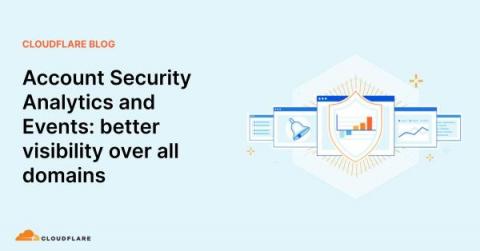
Cloudflare offers many security features like WAF, Bot management, DDoS, Zero Trust, and more! This suite of products are offered in the form of rules to give basic protection against common vulnerability attacks. These rules are usually configured and monitored per domain, which is very simple when we talk about one, two, maybe three domains (or what we call in Cloudflare’s terms, “zones”).

Wildcard and multi-hostname support in Cloudflare Access

We are thrilled to announce the full support of wildcard and multi-hostname application definitions in Cloudflare Access. Until now, Access had limitations that restricted it to a single hostname or a limited set of wildcards. Before diving into these new features let’s review Cloudflare Access and its previous limitations around application definition.

Inside the mind of a hacker: Alternate identities and varied behavioral patterns

The boom of information technology opened an entirely new world of identities and opportunities. Most users’ journies in the cyber world started with the creation of an email address. That email address, which served as an online identity, eased communication between two users, breaking location barriers. Fast-forward to today: A user can create as many accounts as they want across different platforms on the internet, using a wide range of devices such as tablets, mobile phones, and laptops.