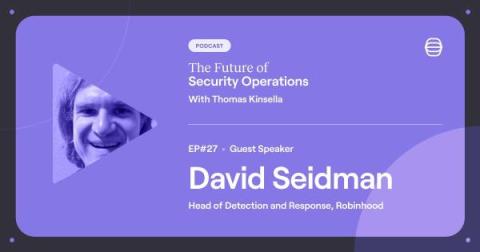
Robinhood's David Seidman: The tradeoff between technical mastery and strong management

In this episode of The Future of Security Operations podcast, David Seidman joins Thomas to discuss their career to date and what they have learned along the way. David is currently Head of Detection and Response at Robinhood, an online brokerage firm with a mission to democratize finance for everyone. David has almost 20 years of experience in software and security, having worked for huge names like Microsoft, Google, Salesforce, and now Robinhood.

Advanced Phishing Campaign Exploits 3rd Parties

Researchers at BlueVoyant warn that attackers are increasingly adding an extra step to their phishing campaigns, impersonating third-parties to lend credibility to the scams. “Third-party phishing sites…will include some characteristics of the original flow, with an added step – the initial impersonation that establishes credibility to the end user is a service that is not connected to the targeted organization,” the researchers write.

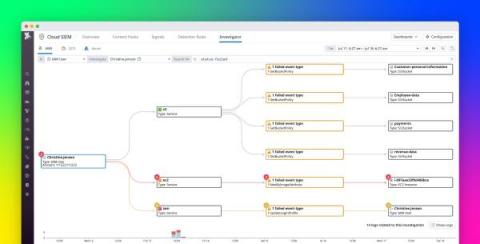
Conduct historical security investigations with Datadog Cloud SIEM Investigator

As organizations increase the size of their cloud footprint and the complexity of their applications, they face challenges securing their infrastructure and services. Security breaches often go undetected for months, giving attackers time to do extensive harm. Once organizations become aware of a breach, they may no longer have access to the logs that comprise a complete history of the attack, because the time span easily exceeds their log retention window.

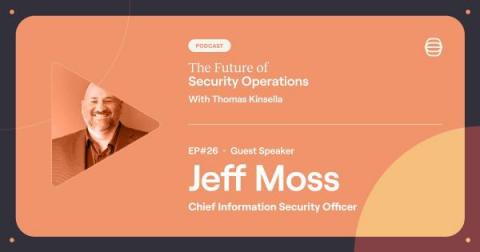
Incode Technologies' Jeff Moss: Scaling security for startups and defending against the ever-growing attack surface

In this episode of The Future of Security Operations podcast, Thomas speaks to Jeff Moss, Senior Director, Information Security, at Incode Technologies. Incode is the leading provider of world-class identity solutions for the world’s largest financial institutions, governments, retailers, hospitality organizations, and gaming establishments.

New SEC Cyber Requirements Unite Security Leaders and Business Stakeholders

It all started with a statement from the US Securities and Exchange Commission’s (SEC) Jaime Lizárraga. The commissioner revealed that a staggering 83% of companies suffered from multiple data breaches last year, with an average expense of $9.44 million in the United States— a dramatic increase of 600% over the past ten years.

Choosing a Financial Services Cyber Risk Remediation Product

In 2022, the finance industry suffered the second-highest number of data breaches. Besides implementing an attack surface management solution, the finance sector must also ensure its remediation product can quickly and efficiently address cybersecurity risks. If you’re in the market for a cyber risk remediation product, this post outlines the key features to look for to maximize the ROI of your new IT security tool. Learn how UpGuard protects financial services from data breaches >

BYOD: What Is Bring Your Own Device Policy and What Secure Devices Can Be Used?

In today's digital age, data is businesses' and individuals' lifeblood. Thus, ensuring the security of sensitive information is of paramount importance. While online cloud storage services have increased in popularity, there are times when you have no choice but to bring your own device. Backup, collaboration, compliance, etc., are some instances where you can apply physical data transportation.

Choosing a Tech Cyber Risk Remediation Product (Key Features)

Cyber risk remediation, the process of actively identifying, remediating, and mitigating cybersecurity risks, is particularly critical for the technology industry. With its characteristic enthusiasm towards adopting the latest trends in innovation, without a cyber threat remediation product, tech companies are unknowingly increasing their risk to a swatch of data breach risks.

Discussions on improving security through chaos engineering

When you rely on a tool to support you in an intense situation, you probably want reassurance that it got tested for extreme conditions. For example, if you’re about to go skydiving, you'd want to know that the parachute strapped to your back underwent rigorous testing and will perform it's needed most. The same is true with the systems supporting our security initiatives. What happens when those systems are under high pressure in an emergency?