Over the last few years, APIs have rapidly become a core strategic element for businesses that want to scale and succeed within their industries. In fact, according to recent research, 97% of enterprise leaders believe that successfully executing an API strategy is essential to ensuring their organization’s growth and revenue.
To combat the growing threat of identity attacks, organizations need to adopt a proactive approach that goes beyond traditional security measures. Identity Threat Detection and Response (ITDR) is one such approach that focuses on monitoring and responding to suspicious activities related to user identities and access management. ITDR solutions can help organizations spot unusual patterns, such as multiple failed login attempts, access from unusual locations, or abnormal behavior within the system.
Read also: Trio convicted for $2.5M cyber scam, Indian law enforcement busts multimillion-dollar investment fraud ring, and more.
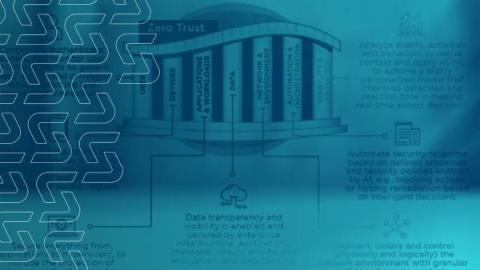
Zero Trust is a cybersecurity philosophy that rejects the idea of offering implicit trust to traffic based on network location. In other words, Zero Trust views all traffic as potentially malicious, regardless of whether it originates from a traditionally trusted network source, and therefore requires all traffic to be scrutinized to determine whether access should be granted to a specific resource.
Not every organization's security apparatus is built or funded at the same level. For smaller organizations or those with other needs competing for budget, here are some points that show it's possible to do more with less. To drive meaningful progress and ensure a robust security posture, it's the C-suite and the board must collaborate and focus on three key areas: coverage, consolidation, and assurance.
The following is derived from the new book, Modern SD-WAN for SASE for Dummies, Netskope Special Edition. Click here to get your complimentary copy. For decades, computer networking has powered our businesses, our communities, and our lives. As computing and the digital world have evolved, enterprise networking has struggled to keep up. Local area networks (LANs) gave way to MPLS WANs and MPLS WANs gave way to SD-WANs. Out with the old, in with the new.
A selection of this week’s more interesting vulnerability disclosures and cyber security news. A bit of a nightmare has surfaced…