How fintechs can improve fraud detection with link analysis during KYC

KYC checks are a regulatory requirement, and they can help prevent fraudsters and other bad actors from accessing your platform. But they're not designed to catch every type of fraud. That’s why many fintechs add additional identity verification and fraud checks. However, some overlook link analysis, which is an increasingly important layer for detecting fraud rings and AI-driven attacks.

What is Generative AI Security? Types, Risks & Best Practices

Generative AI security is the practice of protecting generative artificial intelligence models, applications, and their underlying training data from cyber attacks, data leakage, and unauthorized access. It focuses on securing both sides of the system—i.e., the AI itself (models, pipelines, APIs) and the sensitive data flowing into and out of it during real-world use.

How to Detect and Prevent Lateral Movement Attacks

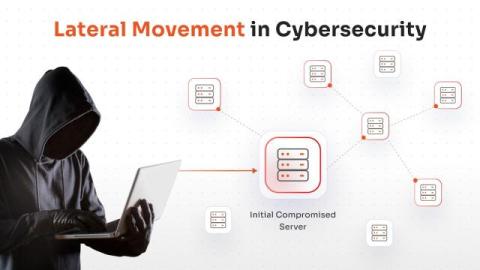
A few years ago, during a routine investigation after a phishing incident, the security team believed the damage was contained. During the attack, one employee’s laptop was compromised. The security team removed the malware and the password was reset. But the next morning, when analysts started reviewing authentication logs, something odd appeared. The same compromised account had logged into three internal servers overnight. Then a database server. Then a backup controller.

CISOs - Eradicating Security questionnaires | TrustCloud

CISOs struggle with security questionnaires. Make security reviews the quickest part of closing a deal with TrustCloud. TrustCloud offers a Trust portal and AI to complete security questionnaires, rolled into one. Don’t let security reviews slow down sales (or take over your life). TrustShare’s secure, public-facing portal invites prospects to view compliance reports and complete security reviews on their own. If there’s a questionnaire, TrustShare pre-fills up to 85%, using information from prior questionnaires and artifacts in your security program.

Top 7 DSPM solutions for 2026

DSPM solutions continuously discover and classify sensitive data, map who can access it, and surface misconfigurations across cloud and hybrid environments. Without them, security teams cannot reliably find shadow data, assess real exposure, or demonstrate that sensitive information is protected. Choosing the right platform means matching data coverage, risk prioritization, and remediation workflows to your actual estate.

Add Context, Risk Scoring, and Automation to Microsoft Sentinel

Microsoft Sentinel gives security operations team visibility into activity across Microsoft environments. As those environments grow, many teams start looking for deeper behavioral context, more consistent investigations, and ways to reduce manual work without replacing what already works. That’s where the Exabeam Microsoft Sentinel Collector comes in.

How to Check Your iPhone for Viruses and Malware

Your iPhone is one of the most secure devices available, but no phone is completely immune to security threats. While Apple's strict security measures make traditional viruses rare, iPhones can still face risks from phishing attacks, malicious websites, compromised Wi-Fi networks, and suspicious apps. In this video, discover how to spot the warning signs that your iPhone might be infected, including: • Unfamiliar apps you didn't install • Unexpected spikes in data usage • Rapid battery drain • Slower performance than usual • Excessive pop-ups and fake system alerts.

I Tried 5 Prompt Injection Attacks (Here's What Happened)

In this video, we explore the growing security risk of prompt injection in large language model (LLM) applications. As AI becomes embedded in more products, new vulnerabilities emerge, especially through natural language manipulation. We break down how LLMs work, the importance of system prompts, and demonstrate five real-world prompt injection techniques used to extract sensitive information or bypass safeguards. You’ll see live examples using different models and learn why newer models are more resilient, but still not immune.

Real-Time AI Security: Securing Autonomous Agents in 2026

Is your security stack ready for the agentic revolution? As we move into 2026, Real-Time AI Security has become the new frontier for enterprise protection. In this episode of AI on the Edge, Amar (CEO of Protecto) sits down with security veteran and investor Anand Tangiraja to discuss why traditional "shift left" strategies and legacy tools are failing in the face of autonomous agents.

Data access governance explained: visibility, control, and automation

Most organizations can answer "who can log in" but not "who can access a specific sensitive file, and should they?" Data access governance (DAG) closes that gap. It governs who can reach sensitive data, whether that access is appropriate, and how teams review that access over time, connecting visibility, control, and automation so organizations can govern access continuously rather than scramble before each audit.