Kill Ransomware: A New Entrant Strikes, Breaching Kerala Police and Beyond

In the ever-evolving landscape of cybersecurity threats, new players emerge with alarming frequency, and the latest to make waves is "Kill Ransomware." With a formation date in 2023, this group wasted no time in announcing its presence on the dark web, enticing skilled hackers to join its ranks. Leveraging sophisticated tactics, Kill Ransomware has swiftly executed four notable breaches, sending shockwaves through the digital realm.

Tips and Best Practices to Secure Active Directory: Audit and Privileged Access Management

Active Directory (AD) is a useful service that helps organizations manage identities and control access to network resources, thus improving corporate cybersecurity. However, when poorly managed, AD can be exploited in a way that could harm an organization’s sensitive assets and operational resilience. In this article, we briefly define what Active Directory is, list its main services, and discuss possible threats.

Deeded's journey to redefining real estate

We're joined by Reuven Gorsht, the co-founder and CEO of Deeded, a platform that’s transforming the real estate closing process. Based in Toronto, Reuven brings a wealth of experience from his previous roles at MoveSnap and SAP, and his academic background from Harvard Business School. Deeded is at the forefront of reimagining the real estate closing experience. So, let's start this insightful conversation with Reuven.

MSSP vs. In-House SOC: Navigating Your Cybersecurity Path

The rapid growth of interconnectedness has been a significant contributor to global prosperity, adding at least 10% to the world's GDP in the past decade. As the digital world becomes more interconnected, infrastructure owners and operators must actively build an integrated cyberdefense. The necessity to protect vital data and information from cyber threats highlights the importance of cyber strategy structure and efficient solutions.

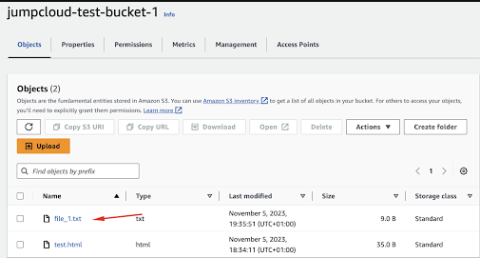
How To Work with Amazon S3 on Amazon Linux

Jump to Tutorial Amazon Simple Storage Service (Amazon S3) is a scalable, high-speed, web-based cloud storage service designed for online backup and archiving of data and applications on Amazon Web Services (AWS). It is designed to make web-scale computing easier for developers and allows you to store and retrieve any amount of data, at any time, from anywhere on the web. Amazon Linux, on the other hand, is a Linux server operating system from AWS, which is engineered for high performance and stability.

AI Unleashed: Transforming Data Processing Speed & Efficiency

Dive into the world of artificial intelligence with us at Brivo, where we explore how AI surpasses human capabilities in processing information swiftly and efficiently. In this video, we'll uncover the secrets behind AI's power to automate tasks and detect patterns faster than ever before, revolutionizing the way businesses operate. 👩‍💻🏢

Tackling Patient Data Risks: TPRM for India's Healthcare Sector

India’s healthcare system finds itself at a critical crossroads, struggling to navigate challenges of accessibility, affordability, and quality by pursuing rapid digitization. While this digital transformation provides extensive benefits ranging from greater efficiency to improved quality of care, it also increases the amount of sensitive patient data healthcare organizations store electronically, escalating concerns regarding data privacy and protection.

Future-Proofing Your Network: The Latest Trends in Wireless Gear

Your home Wi-Fi network is the backbone of your digital life. It connects you to everything from streaming services and social media to smart home devices and video calls. But with the ever-growing number of devices competing for bandwidth, and new technologies constantly emerging, how can you ensure your network is up to the challenge? In this blog post, we'll explore the latest trends in wireless gear. They can help you future-proof your network, keeping you connected and frustration-free for years to come.

The role of DDI solutions in optimizing educational network infrastructures

In an age where education extends beyond the four walls of classrooms and spills into the digital landscape, the security of educational institutions’ networks is not just a concern; it is a critical priority. The diverse user groups, ranging from young learners in K-12 to those in academia, all interact within the same digital infrastructure, making it a vibrant yet vulnerable ecosystem.