Top 4 AI Security Challenges CISOs Face

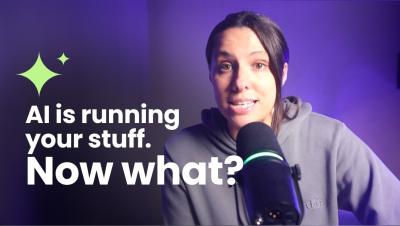
AI adoption is accelerating across enterprises, often faster than security teams can respond. Employees are already using AI tools, copilots, and agents across SaaS apps, browsers, and workflows. That creates new risk around shadow AI, sensitive data exposure, runtime threats, and autonomous actions that traditional controls were never built to handle. In this video, we break down the four AI security challenges CISOs are facing right now.

Streamlining Collaboration at Scale Through Smarter Access to Massive Construction Files

Modern construction projects generate massive volumes of data, including BIM models, construction drawings, inspection reports, reality capture files, specifications, RFIs, and compliance documents. As projects grow in size and complexity, managing this information becomes increasingly difficult, especially when teams are distributed across offices, jobsites, and external partners.


Explainable AI in Email Security: From Black Box to Clarity

Generative AI and sophisticated social engineering have reshaped the cybersecurity landscape in 2026. Traditional "castle-and-moat" defenses centered on the Secure Email Gateway (SEG) are increasingly pressured by machine-scale attacks designed to bypass static filters. As organizations shift toward Integrated Cloud Email Security (ICES) models, a new technical and psychological barrier appears: the "black box" problem of defensive AI.

Defending energy infrastructure in the age of Mythos

The Department of Energy’s Office of Cybersecurity, Energy Security, and Emergency Response (CESER) has released its first five-year strategic plan, following the broader national cybersecurity strategy. It’s coming at a time when the energy cybersecurity landscape is changing quickly, in some cases faster than operators can realistically keep up.

Autonomous AI Agents Explained: Risks, Capabilities & Security Gaps

Autonomous AI agents are no longer experimental—they’re writing code, executing commands, and making decisions in real time. But as AI coding agents become more powerful, they’re also introducing a new and often invisible attack surface. In this video, we break down: AI agents can install packages, run scripts, and modify systems instantly—often without traditional visibility. That means security teams need to rethink how they monitor and protect their environments.

NIST CSF 2.0: What's new in the Cybersecurity Framework

NIST CSF 2.0 expands the Cybersecurity Framework into a broader, risk-based model centered on governance, making leadership accountable for cybersecurity as an enterprise risk. It introduces a sixth core function, enhances supply chain and privacy integration, and improves usability for organizations of all sizes. Profiles, tiers, and new implementation resources help align security efforts with business objectives and evolving threat landscapes.