Open Source Security for Hardening

OS hardening refers to the process of enhancing the security of an operating system by implementing various measures and practices to minimize vulnerabilities and strengthen its resistance against potential cyber threats and attacks. This involves configuring the OS settings, applying security patches, disabling unnecessary services, and implementing access controls to create a more robust and secure computing environment.

Six Signs that Exposure Management is Right for Your Organization

Whether you’re the CISO or part of the incident response team, it’s likely you have heard of exposure management (EM). Introduced by Gartner in 2022 as the evolution of vulnerability management (VM), the name “exposure management” was adopted by vendors faster than you can say “next gen” or “AI-powered”. Unfortunately for consumers the hype added more confusion than clarity. This blog is a chance to reset expectations.

See Falcon Device Control in Action

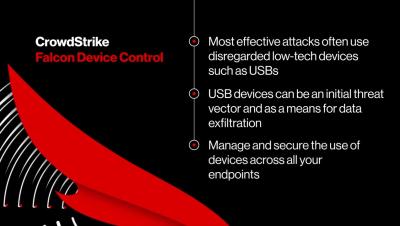
In today’s threat landscape, even low-tech devices like USBs are being exploited by adversaries to launch attacks and steal data. Falcon Device Control offers comprehensive visibility and management of USB and peripheral devices, ensuring that unauthorized access is blocked and data exfiltration attempts are thwarted. With powerful policy enforcement and detailed monitoring, Falcon Device Control helps you safeguard all your endpoints across Windows and macOS systems, providing protection both online and offline.

What is India's Digital Personal Data Protection (DPDP) Act? Everything You Need to Know!

Data protection has become a critical concern worldwide as digital transactions and data exchanges grow. Countries are establishing strict data protection laws to safeguard personal information, and India is no exception. The Digital Personal Data Protection (DPDP) Act is India’s response to growing privacy concerns and the need for robust regulations around personal data usage.

Get to know our new Domains page

Earlier this year, we launched a new Domains page to give you more powerful and flexible attack surface insights. When the recent CUPS vulnerability hit the news, our new page quickly allowed users to create a policy to detect potential threats on port 631—something that wasn’t possible before. Since then, we’ve rolled out dozens of improvements to help security teams like yours feel more confident in managing their ever-changing attack surface.

See Falcon Prevent in Action

As adversaries evolve, so do their methods, leaving traditional antivirus solutions unable to keep up with modern threats. Falcon Prevent, CrowdStrike’s next-gen AV, leverages AI-powered Indicators of Attack and advanced memory scanning to detect and block even the most sophisticated attacks. With real-time visibility, unmatched threat intelligence, and comprehensive coverage across Windows, macOS, and Linux, Falcon Prevent ensures continuous protection both online and offline. Protect your organization with adaptive, AI-driven defense that evolves with modern adversarial techniques.

Advanced Tips for Leveraging the NIST Cybersecurity Framework for Compliance

Depending on the industry, location, and business operations of your organization, you may have any number of cybersecurity regulations to comply with. Keeping track of each law that affects your organization and the various requirements associated with them can be overwhelming, but the consequences of noncompliance are often far worse.

8 Obstacles to Effective Remediation Plan Execution

We’ve all seen it happen: you create a solid remediation plan, map out the misconfigurations and vulnerabilities, and develop a plan to fix them, but when it comes time to execute, things start to fall apart. Why do remediation plans fail even when they seem solid on paper? The truth is, it’s often not the plan itself, but how it’s executed. Let’s break down the common obstacles that cause remediation efforts to go wrong and what you can do to avoid them.

Analyzing the Latest APWG Phishing Activity Trends Report: Key Findings and Insights

In the second quarter of 2024, 877,536 phishing attacks were reported, a marked decrease from the 963,994 attacks reported in the first quarter of the same year. However, this might not be a reason to celebrate just yet, as this reduction might be due to the fact that email providers have made it increasingly difficult for users to report phishing attempts.