Five worthy reads is a regular column on five noteworthy items we have discovered while researching trending and timeless topics. This week’s article elucidates what non-human identities are and why they are garnering attention today. Undoubtedly, today’s digital environment is burgeoning with technological advancements across various spheres, and cybersecurity is no exception. We are in an era where automation, cloud computing, and AI play a more critical role than humans.
General Data Protection Regulation Compliance, also known as GDPR Compliance, is the European Union’s foundation law on data privacy and security. The objective of GDPR is to provide individual’s control over their personal data from how it’s collected to how it’s use, shared, and storage.
Mobile devices now account for more than half of all web traffic, and that number seems poised to increase over the next few years. Between the Apple App Store and Google Play Store, there are already more than 5 million applications available — and not all of them are safe. A smart mobile app security strategy can mitigate some of the threats that come from unauthorized, misconfigured, or malicious software.
AT&T had a big data breach in early 2024, which let millions of customer records with private and sensitive information become public. People were scared by this event, and it also made people question AT&T's data protection policies. The AT&T Data Breach Lawsuit was started because of this, with customers asking for money and information about the company's safety measures. A lot of people are worried about this case, which shows how vulnerable businesses are in the current scenario.
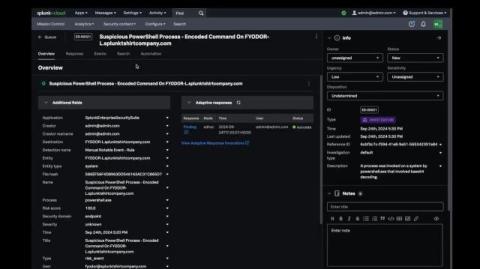
Security teams are juggling 25+ different security tools that perform different actions across detection, investigation and response. Look up an IP here, send malware to a sandbox there, block an executable over there. What’s worse is that the vast majority of those actions are being performed manually. This approach is simply too slow against fast-moving attackers and malware, and it certainly isn’t sustainable.
Over 1 billion known malware threats exist, with an alarming 17 million new variants emerging each month! Malware targeting customer-facing websites and API applications poses significant risks, including compliance violations, defacements, and even blacklisting. In this webinar, join Vivekanand Gopalan, VP of Products at Indusface, as he shares effective strategies for safeguarding websites and APIs against malware.
Multi-Category Security Translation Service (MCSTrans) daemon provides category label information to client processes requesting information. The label translations are defined in: /etc/selinux/targeted/setrans.conf Run the following command and verify mcstrans is not installed.
In this episode of the Trust Issues podcast, host David Puner and David Lee, aka “The Identity Jedi,” delve into the evolving landscape of identity security. They discuss the critical challenges and advancements in securing both human and machine identities. Lee shares insights on the fear and misconceptions surrounding AI, drawing parallels to pop culture references like Marvel’s Jarvis.