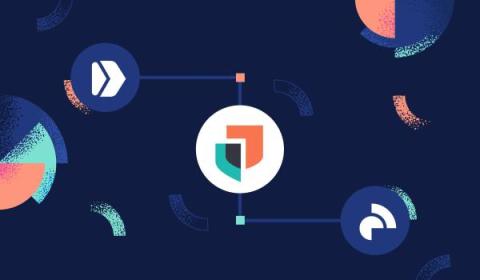
Accelerate incident response with Datadog and ServiceNow

For many organizations, ServiceNow operates as the system of record for governance, auditability, and compliance. But when incidents occur, engineers often need to consult external tools to identify and resolve the root cause. When investigations are siloed from the system of record, engineers must return to ServiceNow to manually update work notes, incident statuses, and mandatory resolution fields before closing tickets.

U.S. Cyber Strategy, data center targets, Camaro Dragon & Stryker attacked / Intel Chat [301]

In this episode of The Cybersecurity Defenders Podcast, we discuss some intel being shared in the LimaCharlie community. Support our show by sharing your favorite episodes with a friend, subscribe, give us a rating or leave a comment on your podcast platform. This podcast is brought to you by LimaCharlie, maker of the SecOps Cloud Platform, infrastructure for SecOps where everything is built API first. Scale with confidence as your business grows.

BYOD Security Risks: How to Protect Your Business

It’s tempting for organizations to let employees use their devices for work. It saves money, is convenient for users, and allows corporate network access from remote locations. However, “bring your own device” (BYOD) arrangements can lead to serious security risks compared to issuing company-owned devices. In this post, we’ll assess the main BYOD security risks and explain how you can prevent them.

DLP leaves IP protection gaps. Here's how AECO can close them.

DLP and Secude solutions protect your IP data from generation to storage to deletion - no matter where it travels. Here’s how. Building designs, mechanical drawings, structural plans. CAD software is the backbone of modern AECO projects and contains some of AECO’s most confidential intellectual property (IP). But most architects, engineers, construction firms and operations companies still rely on Data Loss Prevention (DLP) tools to protect their CAD data.

How a Fortune 50 Company Deployed Agentic AI at Scale Without Losing Control of Their Data

In late 2025, a Fortune 50 enterprise decided to deploy autonomous AI agents across core business operations. Customer support that could reason through complex issues. Supply chain systems that could adapt in real time. Product managers with AI assistants pulling insights from dozens of data sources simultaneously. The capabilities that made the agents useful also introduced a problem nobody had a clean answer for. These weren’t chatbots locked inside a single application.

Microsoft 365 Backup for Law Firms: What Microsoft Doesn't Protect

Most law firms have moved email, documents, and collaboration to Microsoft 365. And most assume Microsoft is backing up that data. They’re wrong. According to Microsoft’s own Services Agreement, “We recommend that you regularly backup Your Content and Data that you store on the Services or store using Third-Party Apps and Services.” Microsoft provides infrastructure redundancy—if their data center has a problem, your data is replicated elsewhere.

How Online Trust and Security Influence Travel Booking Decisions

When travellers plan a trip today, most decisions are made online. From booking accommodation to arranging transport and activities, customers rely heavily on digital research before committing to a purchase. This shift has made trust and security central to the travel booking process. Travellers are not only comparing prices and convenience, but also assessing whether a service provider is reliable, transparent, and safe to engage with.

Cyber Warfare Comes to West Michigan: What the Stryker Cyberattack Means for Manufacturing

In March 2026, one of West Michigan's most recognizable manufacturers found itself at the center of a major cybersecurity incident. Medical technology company Stryker, headquartered near Grand Rapids, experienced a widespread cyberattack that reportedly disrupted systems across its global network.

Why Some UX Design Work Just Feels Right

Spend enough time around digital products and a pattern starts to emerge. Some interfaces feel easy almost immediately. You move through them without thinking much about where to click or what a button means. Other products do the opposite. They slow people down in quiet, frustrating ways. The difference rarely comes down to colors or fonts. More often it's the logic underneath the interface. The structure of decisions. The way the product anticipates what someone might want to do next.

Why Marketing Teams Are Rethinking the Way Customer Personas Are Built

How well do marketing teams really understand their customers today? For years, businesses have relied on buyer personas (detailed profiles representing their ideal customers) to guide messaging, campaigns, and product positioning. And the concept has clearly gained traction: studies show that 44% of marketers already use buyer personas, while another 29% plan to adopt them soon.