
Why Some UX Design Work Just Feels Right
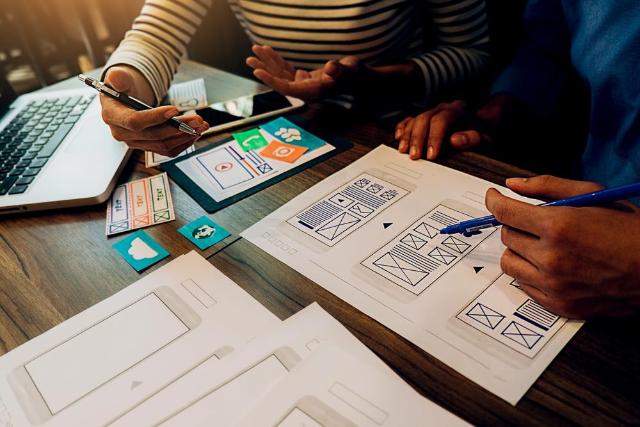
Image Source: depositphotos.com
Spend enough time around digital products and a pattern starts to emerge. Some interfaces feel easy almost immediately. You move through them without thinking much about where to click or what a button means. Other products do the opposite. They slow people down in quiet, frustrating ways.
The difference rarely comes down to colors or fonts.
More often it’s the logic underneath the interface. The structure of decisions. The way the product anticipates what someone might want to do next.
That’s the part strong design teams obsess over.
Companies searching for top ux design agencies usually think they’re looking for better visuals. What they actually need is a clearer experience — one where the interface reflects how real people move through the product instead of how the internal roadmap was originally organized.
And those two things are rarely the same.
Where Complexity Sneaks In
Digital products rarely start out complicated. Early versions are usually simple because there’s not much there yet. A few core features. A straightforward flow. A small group of users who already understand the product’s purpose.
Then growth happens.
A feature gets added for a new customer segment. Another feature appears because an enterprise client requested it. A shortcut becomes permanent because it solved an urgent problem last quarter. Over time the product begins carrying a long history of decisions, each made for good reasons at the time.
Put all of them together and the experience starts feeling heavier.
Not broken. Just harder to move through.
Good UX work often begins at this moment — not by adding something new, but by untangling the accumulation that already exists.
The Quiet Work Behind Interface Clarity
Design conversations rarely revolve around visuals for very long. They tend to drift toward behavior.
Why does this step exist?
Why does the user need to confirm this twice?
Why does the navigation change between these two screens?
Questions like that sound simple. Sometimes they’re not.
The answers usually involve trade-offs. Removing a step might simplify the experience but limit flexibility later. Moving a feature higher in the interface might make it easier to find but also clutter the main workflow.
Teams offering user experience design services spend most of their time inside these kinds of decisions. The work looks calm from the outside — screens, diagrams, prototypes — but underneath there’s a lot of careful reasoning about how people actually behave inside the product.
Because behavior tells the truth. Even when feedback doesn’t.
Why Context Matters More Than Trends
Design trends come and go quickly. Minimalist layouts. Floating navigation. Card-based interfaces. They can be useful references, but copying them blindly rarely works.
Products exist in context.
A financial platform carries different expectations than a social app. Enterprise software behaves differently from consumer tools. Even geography plays a role. Certain interaction patterns feel familiar to users in one market and awkward in another.
That’s part of the reason many companies pay attention to top design agencies new york when looking for experienced design partners. Designers working in dense tech environments encounter a wide mix of products — startups, enterprise tools, fintech platforms, media systems. Over time they develop a sharper sense of when a pattern actually fits and when it’s just fashionable.
That judgment matters more than style.
Good UX Is Often Invisible
The funny thing about strong design work is that users rarely talk about it directly.
They notice when something feels confusing. They notice when they get stuck. But when an experience works smoothly, it tends to disappear into the background.
Tasks happen faster.
Navigation feels predictable.
Nothing requires extra explanation.
That quiet absence of friction is the real goal.
It means the interface is aligned with how people think, not just how the product was built.
And when that alignment finally happens, the product starts to feel different in a subtle way. Not flashier. Not louder. Just… easier to trust.
That’s usually when the design work has finally done its job.