Securing Data Flows into Your Cloud Data Warehouse

Traditionally, data security focused on protecting data at rest within the confines of your on-premise data center. The cloud era has blurred these lines. Data now flows through complex pipelines, often traversing multiple services and third-party vendors. This expanded data perimeter creates new vulnerabilities: It’s crucial to ensure that the data loaded into warehouses and analytics tools is scanned for sensitive information and redacted or redirected accordingly.

CIEM Podcast - What it is. How it fits. Challenges you should know. Advice for how to get started.

This podcast is a quick but informative discussion into CIEM, it's definition, its importance, and its role within a comprehensive IAM and cybersecurity program. As organizations accelerate their migration to cloud environments, managing access and entitlements within these dynamic infrastructures becomes increasingly critical. Cloud Infrastructure Entitlements Management (CIEM) has emerged as a pivotal component in the broader Identity and Access Management (IAM) and cybersecurity landscape.

Vulnerability Scanning for SMBs

A small entrepreneur-led digital marketing agency was having a regular morning with client calls, design presentations, and ad discussions. Suddenly, every team member was locked out of their accounts and couldn’t access their e-mails, cloud folders, or even the company bank account – their data had been taken hostage digitally. This isn’t just a cautionary tale.

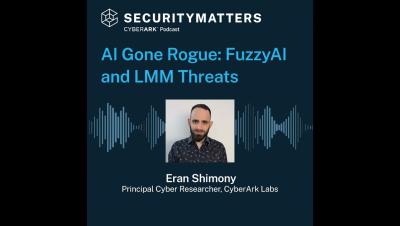
EP 1 - AI Gone Rogue: FuzzyAI and LLM Threats

In the inaugural episode of the Security Matters podcast, host David Puner dives into the world of AI security with CyberArk Labs' Principal Cyber Researcher, Eran Shimony. Discover how FuzzyAI is revolutionizing the protection of large language models (LLMs) by identifying vulnerabilities before attackers can exploit them. Learn about the challenges of securing generative AI and the innovative techniques used to stay ahead of threats. Tune in for an insightful discussion on the future of AI security and the importance of safeguarding LLMs.

How to Securely Embrace the AI Revolution in Software Development

Software development is one of the most impacted workflows in the Artificial Intelligence revolution. How will you handle the AI-driven revolution in software development securely? Check out this video to see how our innovation can help you stop risks in AI and the software supply chain at the start.

Web-Based AI Agents: Unveiling the Emerging Insider Threat

The introduction of OpenAI’s ‘Operator’ is a game changer for AI-driven automation. Currently designed for consumers, it’s only a matter of time before such web-based AI agents are widely adopted in the workplace. These agents aren’t just chatbots; they replicate human interaction with web applications, executing commands and automating actions that once required manual input.

Will Proposed Rules for Health Industry Actually Strengthen Cybersecurity?

If you’re a US citizen, you’re likely numb to the endless letters informing you of your information being stolen yet again. For most of us, this is an annoyance and an inconvenience. But if you’re a patient in a hospital during an attack, it would be disconcerting to know that studies indicate medical errors increase by 30% when clinical applications are offline, and there’s a “small but significant” increase in patient mortality.

Protecting Sensitive Data in Snowflake through Protecto's External Tokenization

With the rapid expansion of cloud data storage and analytics, enterprises are increasingly leveraging platforms like Snowflake for their scalability and performance. However, this also introduces new challenges in data security, particularly for industries dealing with sensitive data such as finance, healthcare, and e-commerce.

Facebook Users Beware: Thousands Hit by New Phishing Scam

Check Point warns that a large-scale phishing campaign is targeting Facebook accounts with phony copyright infringement notices. The phishing emails have targeted more than 12,000 email addresses at hundreds of companies. Nearly all of the emails targeted individuals in the US, the EU, and Australia, though the researchers also observed some phishing templates written in Chinese and Arabic.