Stopping the Agentic Breach: How to Operationalize Your Defense Against Mythos-Speed Attacks

The industry has spent the past few weeks focused on Claude Mythos Preview and the rise of autonomous offensive AI. As outlined in Claude Mythos, Project Glasswing, and the Machine-Speed Security Race, this shift is not only about faster attacks. The same AI-driven acceleration that helps attackers discover weaknesses faster can also help defenders validate exposure sooner. For security operations teams, the challenge is turning that strategic shift into action.

Zero-touch PKI, now end-to-end, and more

In this webinar, we will see what fully automated certificate management looks like with Key Manager Plus, including a first look at Key Manager Plus Cloud. What we'll cover The operational definition, what it takes to get there, and the steps involved. How Key Manager Plus now handles the last mile of every renewal, automatically running the scripts, executables, and service restarts that make a deployment complete.

5 Best Mobile Device Management (MDM) Solutions

With the surge in remote work and BYOD (Bring Your Own Device) policies, securing corporate data across thousands of mobile endpoints has become a critical challenge. In fact, over 80% of small business owners rely on mobile devices for work daily (Zen Business), making mobile device security a critical aspect for businesses. To meet this requirement, businesses are opting for Mobile Device Management (MDM) software at scale.

Streamlining CMMC Compliance: How Bitsight Empowers the Defense Industrial Base

For organizations within the Defense Industrial Base (DIB), the Cybersecurity Maturity Model Certification (CMMC) 2.0 represents more than a regulatory hurdle. It is becoming a core requirement for doing business with the Department of Defense and for protecting sensitive information across the defense supply chain.

CrowdStrike Named a Leader in Identity Threat Detection and Response

Two recent industry reports validate CrowdStrike’s leadership in the identity threat detection and response (ITDR) market: Identity is the front line of modern cyberattacks. Today’s adversaries log in and use legitimate identities to move laterally, escalate privileges, and operate inside legitimate sessions as trusted users.

You probably don't need private PKI for internal infrastructure

Running your own certificate authority sounds like the responsible choice for internal infrastructure. Distribute your root cert to every machine and issue certs internally. In practice, you spend the next six months chasing down every device, contractor laptop, and vendor console that didn’t get root installed. The warnings come back. And when they do, people click through them, because they always have. There’s a simpler path, and most teams don’t know it exists.

Disrupting Glassworm: Inside CrowdStrike's Takedown of a Developer-Targeting Botnet

On May 26, 2026, at 14:00 UTC, the CrowdStrike Counter Adversary Operations team executed a coordinated takedown of the Glassworm botnet, a global threat targeting software developers through the open-source supply chain. In collaboration with Google and the Shadowserver Foundation, we struck all four of Glassworm's command-and-control (C2) channels simultaneously, severing the operators from their infected machines and their ability to deliver new malicious payloads.

Introducing the Detectify MCP Server to connect security intelligence into your AI workflows

We are launching the Detectify MCP Server to deliver real-time vulnerability data and attack surface insights directly into your AI-powered workflows. Built for developers and AppSec teams using Claude Code, Cursor, ChatGPT, and Claude Desktop, it delivers security data straight to your AI assistants via a remote-hosted server, giving you hacker-proof guardrails without adding anything new to deploy or maintain.
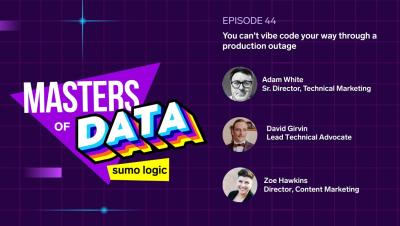
Ep 44: You can't vibe code your way through a production outage

In this episode of Masters of Data, we tackle one of tech's buzziest debates: vibe coding versus production-ready software. We break down where AI-assisted "just make it work" coding genuinely shines (think POCs, prototypes, and getting stakeholder buy-in fast) and where it falls dangerously short when someone tries to ship it to ten thousand enterprise users. We also dig into David's agentic engineering workflow, security risks like malicious MCP servers and supply chain attacks, and why turning a vibe-coded prototype into real software still takes months, not days. Bottom line.