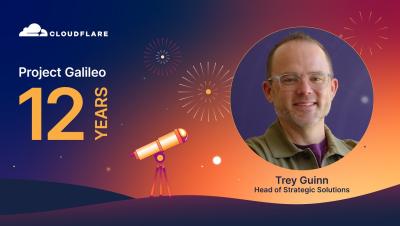
Check out this special video where we heard from Trey Guinn, one of our long-time Cloudflare volunteers who worked directly with organizations protected under Project Galileo.
Over 78% of developers are using Claude for coding, but almost everyone is leaving its single most powerful feature switched off: Claude Skills. In this video, we break down what Claude Skills are, how they use "progressive disclosure" to keep your context window light, and the 7 best engineering skills you can install this week to completely supercharge your workflow.
Falcon Next-Gen Identity Security enables continuous identity for AI agents, evaluating every tool call in real time using user context, agent trust, and risk signals. Watch the demo to see how CrowdStrike enforces dynamic policies and continuously validates both users and agents to prevent unauthorized actions, contain compromised agents, and securely scale AI adoption. Subscribe and stay updated!
Falcon Privileged Access replaces static, always-on privileges with zero standing access and dynamic control. Watch this demo to see how alongside Entra roles, AD groups, and local privileges, AWS roles and access to specific tags can be granted just in time, under secure conditions, and revoked automatically when the session ends or the moment conditions change. Subscribe and stay updated!
Data on its own is only raw material. It becomes information when it is structured, and it becomes intelligence when you add business context, which is what turns cyber facts into decisions leaders can act on.
Large enterprises manage cloud security by treating business units (BUs) like customers, providing services within policy guardrails. The ACE platform orchestrates this, allowing distinct policies for each BU, balancing business speed with compliance.
Third party risk used to focus mainly on legal and financial checks. Now organisations have to think about a much wider set of issues, from cyber posture and resilience to operational dependency and concentration risk across a growing supplier web.
"Usually it's not a question of if the bad guys get in. It's a question of what happens when they do." Jay Wilson, CISO and CIO at Insurity, and Garrett Hamilton, CEO of Reach, joined Shubhangi Dua on The Security Strategist from EM360Tech to talk about why the controls you already own are where exposure quietly builds up. That's Jay's line, and one every security leader has lived. Defense in depth only holds if every inner layer is configured the way you think it is. The outer door gets the attention. The inner doors are where incidents actually get stopped, or don't.
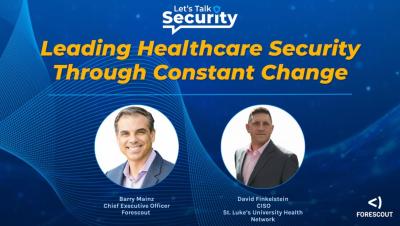
Healthcare CISOs are navigating one of the most complex security environments. In this conversation, Barry Mainz will be joined by David Finkelstein, CISO, St. Luke’s University Health Network, a seasoned healthcare security leader with experience spanning cyber, operations, and military service, to discuss what it takes to build a modern healthcare cybersecurity program that is resilient today and ready for tomorrow.