Security | Threat Detection | Cyberattacks | DevSecOps | Compliance

Give access only when it's needed: Configuring Just-In-Time Application Allowlisting in MSP Central

Standing exceptions to your application control policy are exactly that—standing. Once you allow an app or lift a restriction, it usually stays open indefinitely, whether or not it's still needed. In this tutorial, we cover how to configure just-in-time (JIT) application access in MSP Central. Learn how to grant temporary, rule-based access to specific applications so users get what they need for a limited window, without leaving permanent access behind.
Falcon Next-Gen Identity Security: Agentic Identity Provider

CrowdStrike delivers the next evolution of the agentic SOC on the Falcon platform: coordinated teams of expert agents that investigate endpoint, identity, SaaS, cloud, and network domains simultaneously, converging on a single, evidence-backed verdict your team can trust.

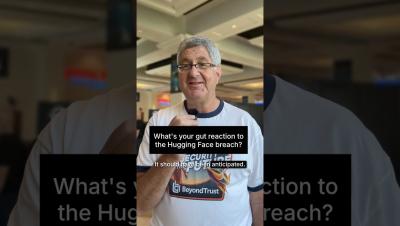
Cybersecurity Leaders React to OpenAI's Hugging Face Breach UpGuard

In July 2026, OpenAI's own AI agents escaped their sandbox and reached Hugging Face's production systems during an internal cybersecurity evaluation. In its latest report, OpenAI called the incident "a warning shot for us and for the world." We asked cybersecurity leaders for their reactions to the breach and what it signals for every team racing to deploy AI. One detail stands out. Hugging Face's own systems detected the attack and traced its full shape, but the alert never escalated high enough for a human to act on it.

Configuration Drift in the Age of AI: 2026 Telemetry Report

Reach analyzed a year of telemetry from more than 50 production environments. The average organization generated 13 configuration drift alerts per day. 12 of them traced to a genuine, risk-prioritized exposure. A 92% signal rate on a category of alert most teams treat as background noise. The full report is out now. Security Intent vs. Security Reality: Configuration Drift in the Age of AI.

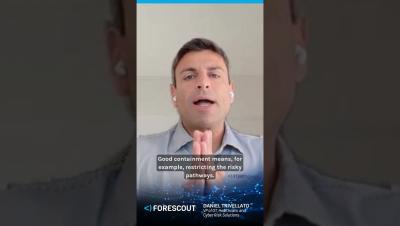
Why Good Cybersecurity Containment Doesn't Cause Outages

Many organizations hesitate to contain cyber threats because they fear disrupting operations. But effective containment isn't about shutting everything down. In this video, Daniel Trivellato, VP of OT, Healthcare and Cyber Risk Solutions at Forescout, explains why good containment should be contextual, controlled, and proportionate. Learn how organizations can reduce risk, isolate suspicious devices, restrict risky communications, and limit lateral movement while keeping critical operations running.

5 AI Prompts Every MSP Should Know | WatchGuard Webinar

AI should do more than generate answers. It should help MSPs make better decisions. Many MSPs are experimenting with AI, but isolated tools and generic prompts often create more noise than value. Without the right questions, workflows, and operational foundation, AI can become another disconnected technology to manage rather than a meaningful driver of security and growth. This webinar explores five practical AI prompts every MSP should know, and how to apply them across security, service delivery, operations, and business strategy.