Security | Threat Detection | Cyberattacks | DevSecOps | Compliance

How Researchers Collect Indicators of Compromise

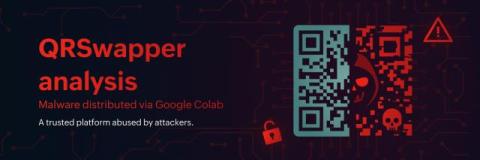
As security researchers, we actively monitor the latest CVEs and their publicly available exploits to create signatures. Beyond CVEs, we also hunt for malware on platforms such as MalwareBazaar, which enhances our visibility into attacks occurring across networks. Today, we'll demonstrate a simple workflow showing how researchers use various tools to collect indicators of compromise (IOCs) and develop appropriate signatures from detonated malware.

IBM 2025 Cost of a Data Breach Report: Lessons for API and AI Security

IBM’s 2025 Cost of a Data Breach Report offers one of the clearest and most comprehensive views yet of how AI adoption is shaping the security landscape. While breach numbers are relatively low – only 13% of organizations reported breaches involving AI models or applications – the report reveals a troubling pattern: APIs and integrations are often the real entry point, and they’re frequently under-secured. At Wallarm, we’ve been banging this drum for a while.

Kroll Conversations: Meet the Offensive Security Experts

Organizations are under constant threat from vulnerabilities hidden deep within their own systems and applications. Uncovering these types of weaknesses before they lead to security issues such as malware, ransomware attacks and social engineering is a challenge that Jugal Bhatt and Jonathan Hosick take on every day.

COPPA Compliance - Now!

On June 23, 2025, the Federal Trade Commission’s sweeping amendments to the Children’s Online Privacy Protection Rule (COPPA) took effect, ushering in more stringent duties for any operator collecting or using children’s data—whether via websites, services, or AI‑powered agents. Companies must achieve full compliance by April 22, 2026 (Finnegan | Leading IP+ Law Firm, Bass, Berry & Sims PLC).

Beyond the Prompt: Securing the "Brain" of Your AI Agents

Imagine an autonomous AI agent tasked with a simple job: generating a weekly sales report. It does this reliably every Monday. But one week, it doesn't just create the report. It also queries the customer database, exports every single record, and sends the file to an unknown external server. Your firewalls saw nothing wrong. Your API gateway logged a series of seemingly valid calls. So, what happened? The agent wasn't hacked. Its mind was changed.

MCP security is non-negotiable for AI-driven organizations

Model Context Protocol (MCP) is gaining traction because it enables LLMs to interact with live systems and enhance context by retrieving and managing relevant real-time information. LLMs can’t query Salesforce, trigger an Okta password reset, or fetch context from your SIEM, for example. MCP bridges that gap by connecting AI models to real-world APIs, powering AI applications like retrieval-augmented generation and multi-step agent workflows. They’re fast to deploy.

Beyond PCI and HIPAA: How Feroot Powers California Invasion of Privacy Act (CIPA) Compliance

Yes—if your website, app, or other online platform interacts with users located in California, CIPA may apply, even if your business is not physically based there. Enforced under California Penal Code §§ 631, 632, 632.7, and 637.2, CIPA was originally designed to stop wiretapping and unauthorized call recording. Courts are increasingly applying it to digital communications, including web chats, form submissions, and user behavior tracking. The challenge?

SOC 2 Type I vs Type II: Which One Does Your Business Need?

If you’ve been Googling things like “Do I need SOC 2 Type 1 or Type 2?” you’re not alone. It’s one of the most common questions we hear from businesses tackling SOC 2 for the first time. Whether you're a fast-growing SaaS start up, a fintech navigating due diligence, or a healthcare platform handling sensitive data, getting a clear handle on the difference between Type I and Type II can save you serious time, money, and frustration.

Falcon Next-Gen Identity Security Unifies Protection Across All Identities and Domains

CrowdStrike is excited to announce CrowdStrike Falcon Next-Gen Identity Security, a new solution built to protect every identity — human, non-human, and AI agent — across on-premises, cloud, and SaaS environments. This new offering addresses the growing need for comprehensive protection throughout the full identity lifecycle.

Defending Against SCATTERED SPIDER with Falcon Next-Gen SIEM

SCATTERED SPIDER is a prolific eCrime adversary that has conducted a range of financially motivated activities beginning in early 2022. Since surfacing, this adversary continues to compromise organizations around the world, deploying ransomware and exfiltrating sensitive files.