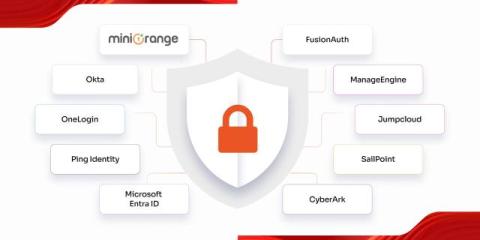
Unused SaaS licenses are a budget drain and a security risk. The need to easily track and manage SaaS licenses and identify unused ones is a challenge that every modern organization faces.
Security powerhouse CrowdStrike made headlines this week with a major acquisition in the identity space with their purchase of SGNL for a reported $740 million. If you’re wondering why did CrowdStrike buy SGNL, you’re asking the right question. And you’re probably not alone. Over the past year, we’ve watched some of the largest security platforms in the world spend real money acquiring identity security companies.
Over 68% of companies have suffered API security breaches at a cost exceeding $1M. The question is not whether your APIs are vulnerable, but whether you can detect the threats in time. With API traffic comprising 71% of all web activity, the digital backbone of the modern enterprise is both our greatest strength and most exploited threat surface. Are we seeing every single API? These statistics reveal a concerning reality for most organizations.
A global technology services provider based in the United Kingdom, with more than 11,000 employees, was quickly scaling while serving clients across the finance, telecom, media, retail and healthcare sectors. Behind the scenes, its Information Technology (IT) and security teams were facing growing challenges: too many password tools, limited visibility into access controls and widening compliance gaps as cyber threats became more sophisticated.
Criminal infrastructure often fails for the same reasons it succeeds: it is rushed, reused, and poorly secured. In the case of StealC, the thin line between attacker and victim turned out to be highly exploitable. StealC is an infostealer malware that has been circulating since early 2023, sold under a Malware-as-a-Service (MaaS) model and marketed to threat actors seeking to steal cookies, passwords, and other sensitive data from infected computers.
Due to growing awareness of data privacy risks, organizations face mounting pressure from regulators to safeguard sensitive personal information. This can be particularly challenging for US companies, which must adhere to both domestic regulations, such as the CCPA and HIPAA, as well as international frameworks in their target global markets.
Let’s catch up on the more interesting vulnerability disclosures and cyber security news gathered from articles across the web this week. This is what we have been reading about on our coffee break! You might want to get on to this…
A leading insurance and asset management company was hit by a large-scale data breach, impacting more than four million customer and employee records and resulting in widespread media attention. Through an accelerated response with emergency call center support, a dedicated support website and expedited notice mailing, Kroll’s Breach Notification services ensured the business was able to take quick and decisive action following this globally significant security event.
By Omry Farajun, President and CEO, Storage Guardian Storage Guardian, in partnership with Acronis, has launched the Incident Response Planner to help organizations meet CIS Control 17 – Incident Response Management. The solution uses out-of-band SMS communication and predefined response templates to rapidly engage key stakeholders, host a centralized incident response plan and execute validation drills and tabletop exercises with confidence.
The persistence of decades-old technology in industrial settings is a fact of life. Operational technology (OT) environments in factories, power plants and critical infrastructure facilities are studded with industrial PCs running operating systems that the corporate IT world retired years ago.