Security | Threat Detection | Cyberattacks | DevSecOps | Compliance

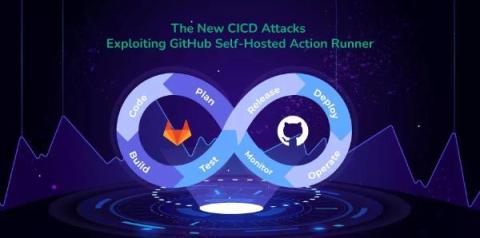
Top 6 DevOps Web Application Security Best Practices

In today’s world, the importance of incorporating web application security best practices cannot be overstated. Recent studies show that web applications are the top attack vector in nearly 80% of incidents. The good news is DevOps processes lend themselves to integrated security practices. Here are the top six best practices for seamlessly weaving web application security into DevOps.

The Evolution of IoT Cybersecurity: A 20-Year Journey

Each October, Cybersecurity Awareness Month encourages individuals and organizations to prioritize cybersecurity. This initiative has played a vital role in raising awareness about IoT security and promoting responsible IoT device usage. 2023 marks the 20th anniversary of Cybersecurity Awareness Month, and it seems like the perfect time to reflect on the ever-evolving landscape of IoT (Internet of Things) cybersecurity over the past two decades.

Cloud Threats Memo: Multiple DarkGate Loader Campaigns Exploiting Legitimate Cloud Services

DarkGate Loader is a commodity malware loader with multiple features including the ability to download and execute files to memory, a Hidden Virtual Network Computing (HVNC) module, keylogging, information-stealing capabilities, and privilege escalation. Its distribution mechanism also makes use of legitimate AutoIt files to inject the malicious payload.

How to Get HITRUST Certified-and Why

In 2007, a group of healthcare organizations, technology companies, and government agencies—including the American Hospital Association, Blue Cross Blue Shield Association, the Centers for Medicare & Medicaid Services (CMS), McKesson Corporation, and Microsoft—got together to create a unified approach to information security and privacy. The result was the Health Information Trust Alliance’s Common Security Framework (HITRUST CSF).

SQL server attacks: mechanisms you must know

SQL server attacks are one of the most painful attacks organizations can suffer. An organization’s database is one of its softest spots, with a wide surface area susceptible to attacks. This results in it being an attractive target of attackers. Neglecting your organization’s SQL server security is equivalent to having a bomb ticking in your organization’s IT infrastructure.

SSE Is a Proven Path for Getting To SASE

Modern enterprise complexity is challenging cybersecurity programs. With the widespread adoption of cloud services and remote work, and the broadening distribution of applications and employees away from traditional corporate locations, organizations require a more flexible and scalable approach to network security. SASE technology can help address these issues, making SASE adoption a goal for many organizations worldwide. But adoption paths can vary widely.

Healthcare - Navigating your path to cyber wellness

The healthcare industry is progressing towards a more mature cybersecurity posture. However, given it remains a popular attack target, more attention is needed. Results from The Cost of a Data Breach Report 2023 reported that healthcare has had the highest industry cost of breach for 13 consecutive years, to the tune of $10.93M. In 2022, the top 35 global security breaches exposed 1.2 billion records, and 34% of those attacks hit the public sector and healthcare organizations.

Snyk welcomes Reviewpad: Code, commit, celebrate!

Snyk was founded with the mission of building security products that developers actually want to use. It's how we began and it's that North Star that still drives us today. For security to work at the speed and scale of the modern security development lifecycle (SDLC), developers need tools that integrate seamlessly into the flows they use every day, providing intuitive, actionable feedback along the way.

How to Apply Zero Trust Architecture (ZTA) In the Real World

How well do you sleep at night? Odds are you would sleep better if you could wake up to Zero Trust Architecture (ZTA). A true ZTA network makes incident response wake-up calls far less likely by shutting down data breaches, ransomware threats or any kind of unauthorised network access. It would also save your organisation at least £500,000 over a four-year period, making your security efforts much easier to advocate for. That’s the dream anyway.