Security | Threat Detection | Cyberattacks | DevSecOps | Compliance

A New Security-Focused Path Search View for Faster, Clearer Analysis

Security teams frequently investigate whether traffic is allowed, denied, or translated along a path, but traditional visualization methods create unnecessary complexity. A standard Path Search view includes every L2 and L3 hop—switches, routers, and intermediary devices that participate in forwarding but apply no security policy. While this depth is helpful for network troubleshooting, it overwhelms analysts focused specifically on enforcement points.
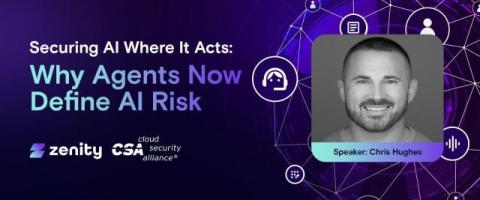
Securing AI Where It Acts: Why Agents Now Define AI Risk

In the first round of the AI gold rush, most conversations about AI security centered on models: large language models, training data, hallucinations, and prompt safety. That focus made sense when AI was largely confined to generating text, images, or recommendations. But that era is already giving way to something far more consequential.

The AI Authorization Revolution: Why "Who Can Do What" Is the New Security Battleground

Remember when security was simple? Users had roles. Roles had permissions. Done. Those were the days when your biggest worry was whether someone from marketing accidentally got admin access to the finance system. Welcome to 2026, where that simplicity is dead.

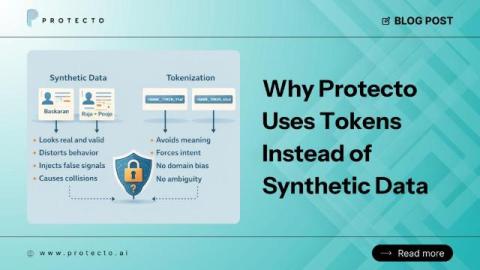
Why Protecto Uses Tokens Instead of Synthetic Data

On the surface, synthetic data looks like the safer option. It’s not real. It doesn’t point to an actual person. It can be reversed if needed. And it keeps systems running without exposing sensitive values. That logic makes sense. Until you look at how systems actually behave. Protecto supports both reversible synthetic data and tokenization. Referential integrity can be preserved either way. Mapping back is not the hard part. The difference is not whether you can recover the original value.

Introducing Mend.io's AI Security Maturity Survey + Compliance Checklist available today

Today, we’re excited to launch two practical tools to help teams quickly understand their AI maturity, quantify AI risk, and gather the evidence executives will ask for in 2026: an interactive AI Security Maturity Survey (with a personalized score and mapped recommendations) and a companion AI Security Compliance Checklist. Both are aligned to industry standards and built to be immediately useful in discovery, audits, and planning.

LimaCharlie Announces Agentic SecOps Workspace, Redefining AI in Security Operations

Sr. Technical Content Strategist LimaCharlie is announcing their Agentic SecOps Workspace, a security platform that elevates AI from an advisory role to an operational one. This is a key development for security teams who recognize that AI must offer more than chat interfaces, simple alert triage or next-step recommendations. To keep pace with modern threats and business needs, AI must be allowed to operate and scale.

Delegated DNS validation: proving domain ownership without exposing credentials

It seems like every service wants proof you control your domain. Certificate authorities need it to issue certificates. Email platforms need it to authorize sending. Analytics needs it to gather data. Just add this magic TXT record to your DNS, wait for propagation, click verify. It works fine when it’s a one-time setup, but certificate lifetimes are dropping to 47 days, and you won’t be able to keep up on that schedule.

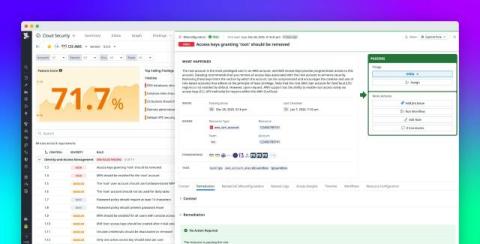
Scale compliance across global frameworks with Datadog Cloud Security

Security organizations are expected to keep pace with a growing set of regulatory and industry requirements as their cloud environments grow. Yet maintaining compliance in modern, fast-moving infrastructure is increasingly difficult. Cloud resources change by the minute, teams adopt new services without centralized oversight, and evidence needed for audits is often scattered across tools and providers.