Security | Threat Detection | Cyberattacks | DevSecOps | Compliance

A Step-by-Step Guide to Enabling HIPAA-Safe Healthcare Data for AI

Healthcare organizations are under immense pressure to improve care quality, reduce costs, and operate more efficiently. AI is speeding and simplifying all activities and is integrated across most workflows. But there’s a tradeoff: the moment patient data enters an AI workflow, your HIPAA obligations intensify. HIPAA violations are not theoretical.

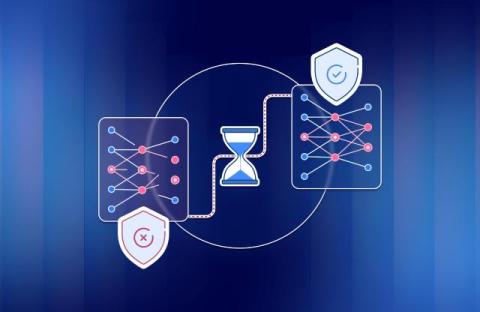
It's About Time: Why Memcyco Raised $37M, and Why Now

Digital fraud hasn’t stood still. Attackers have adopted automation, refined tooling, and improved coordination across phishing, impersonation, and account takeover (ATO). In that sense, fraud has become smarter in how it’s delivered and scaled. But this form of sophistication isn’t primarily about more complex technical breaches, and it doesn’t explain why losses continue to rise even as enterprises deploy increasingly advanced security controls.

Powerful antivirus guidance for Macfirst organizations in 2026

Businesses with a Mac-first strategy have long enjoyed the perception of inherent security from the Unix-based operating system. However, as 2026 unfolds, the digital threat landscape evolves rapidly, and Mac-first organizations are now facing a range of sophisticated cyber risks.

Combatting MSP tool sprawl with a unified approach to delivering cyber resilience

Picture this: A ransomware alert fires. Your technician opens the EDR console, checks the backup dashboard, logs in to the email security portal, verifies patch status in the RMM tool and correlates alerts across multiple vendor platforms. By the time they track down the root cause, the infection has already spread. This is more than a technical headache; it’s a profitability crisis.

Domain-to-IP Volatility at Scale: A Study of 4 Million Enterprise Domains

Exposure management depends on the ability to consistently observe and attribute externally reachable systems. Domains are commonly treated as stable identifiers, resolving to IP addresses that can be associated with specific assets and monitored over time. In modern enterprise environments, this assumption increasingly fails. In many architectures, IP addresses function as routing mechanisms rather than stable identifiers, changing as traffic is distributed and infrastructure is rebalanced.

CVE-2026-21858 (Ni8mare): Unauthenticated Remote Code Execution in Self-Hosted n8n

A critical unauthenticated remote code execution (RCE) vulnerability has been disclosed in n8n, a widely used open-source workflow automation platform that orchestrates business processes, SaaS integrations, and event-driven automation pipelines. Tracked as CVE-2026-21858 and referred to as Ni8mare, the vulnerability carries a CVSS v3.1 score of 10.0 (Critical) and allows unauthenticated attackers to execute arbitrary system-level code on vulnerable self-hosted n8n instances.