Security | Threat Detection | Cyberattacks | DevSecOps | Compliance

Most Popular HIPAA-Compliant Cloud Storage Services

Cloud computing provides undeniable benefits for storing and accessing electronic health records. Files stored in the cloud are accessible anytime and anywhere from any device, which makes it easy to share critical medical information between healthcare workers. But is cloud storage secure enough to store, access and transfer sensitive personal and medical information?

How to Maintain Service Oriented Architecture Security

Service Oriented Architecture has been one of the buzzwords in the cyber security community for a while. In this article, we will discuss what it is and how you can implement SOA security. What is Service Oriented Architecture Security? Service Oriented Architecture (also known as SOA) refers to a unique style of software design. In Service Oriented Architecture, the services are provided by application components using a communication protocol over the network.

A Day in the Life: Secrets of a Top Splunk Security Analyst

At Splunk, we’re proud to employ some of the top security analysts in the industry. On any given day, they’re investigating security incidents, triaging alerts and identifying threats so our systems and data — as well as those of our customers — remain secure. But what, exactly, do Splunk security analysts do? And what are some of their biggest challenges?

License Compatibility: Combining Open Source Licenses

Free and open source software (FOSS) components have become the basic building blocks of our software products, helping today’s developers build and ship innovative products faster than ever before. Many developers tend to forget that while open source licenses are free, they still come with a set of terms and conditions that users must abide by.

Detecting Windows Persistence

Persistence is effectively the ability of the attacker to maintain access to a compromised host through intermittent network access, system reboots, and (to a certain degree) remediation activities. The ability of an attacker to compromise a system or network and successfully carry out their objectives typically relies on their ability to maintain some sort of persistence on the target system/network.

Breaking Down Risky Open Source Libraries by Language

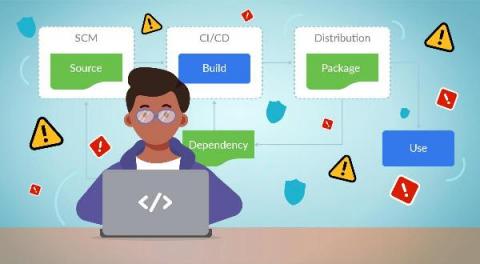
You work hard to produce quality applications on tight deadlines, and like every other development team out there, that often means relying on open source code to keep projects on track. Having access to plug-and-go code is invaluable when you’re racing the clock, but the accessibility of open source libraries comes with a caveat: increased risk.

Integrating the Risk Management Framework (RMF) with DevOps

Information security should be at the heart of every system launched. In accordance with the Federal Information Security Management Act (FISMA), an information technology system is granted an Authority to Operate (ATO) after passing a risk-based cybersecurity assessment.

Threat hunting capture the flag with Elastic Security: BSides 2020

Last month, members of the Elastic Security team hosted a threat hunting capture the flag (CTF) event at BSides SATX. We provided the community with an environment to learn and practice threat hunting with our team, and cultivated new relationships with attendees. By sharing information with security practitioners, we can help prepare them to defend their organization’s data from attack through knowledge transfer.

5 tips to avoid cyberattacks on EdTech platforms

As the COVID-19 pandemic rages on, many educational institutions have been forced to shift their on-campus classes to online classes. Various EdTech platforms have also launched free classes that have prompted students to try their hands on digital education. With more students turning to online learning than ever, these platforms have emerged as a lucrative target for cybercriminals.

The NIST Cybersecurity Framework: 5 core functions and how to align with them using AD360

The Cybersecurity Framework (CSF) was developed by the National Institute of Standards and Technology (NIST), a division of the U.S. Department of Commerce. This framework was created through collaboration between various private-sector and government experts to provide high-level taxonomy of cybersecurity outcomes and a methodology to assess and manage those outcomes.