Security | Threat Detection | Cyberattacks | DevSecOps | Compliance

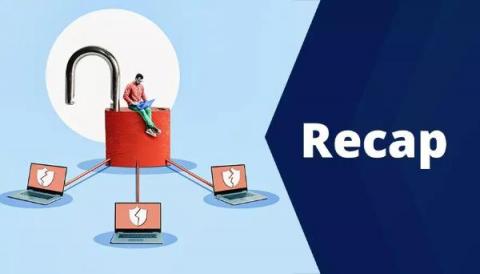
What Are Data Leaks?

Data leaks occur when sensitive data is unintentionally exposed from within an organization. Data leaks can refer to both the leakage of digital data, meaning anything that can be transmitted through the internet, as well as physical data, such as USB drives. Continue reading to learn how data leaks happen, how serious they can be and how to prevent them from occurring.

Signing container images: Comparing Sigstore, Notary, and Docker Content Trust

In the modern software ecosystem, containerization has become a popular method for packaging and deploying applications. Alongside this growing trend, ensuring the security of software supply chains has become a critical concern for businesses of all sizes. Implementing best practices, such as signing and verifying images to mitigate man-in-the-middle (MITM) attacks and validating their authenticity and freshness, play a pivotal role in safeguarding the integrity of the software supply chain.

Delta Dental of California is Another Victim in the String of MOVEit Data Breaches

Delta Dental of California is a major dental insurance provider throughout one of the largest states in the US. The company is well-known for offering PPO dental insurance policies and other varieties of dental insurance options. The company was founded in 1955 and serves millions of Americans throughout nearly all of the 50 states. All California residents using Delta Dental may have been impacted by a recent data breach that could cause real problems for them.

Automation Advancements in Falcon Intelligence Recon: Disrupt the Adversary and Reduce Risk

Adversaries are continuing to expand their attacks by adding tactics like domain abuse, multifactor authentication (MFA) fatigue and unique crafted exploit kits acquired from underground forums. Typosquatted domains pose a risk for any organization as they are used at the start of the attack chain, with the goal of misdirecting users to a look-alike site to steal their identities.

Multi-VRF support for Egress Gateways using Calico

This is a follow up discussion of some advanced use case scenarios for Egress Gateways. In a previous blog post, Policy-based routing with Egress Gateways, I explained how to achieve connectivity to multiple destinations using policies based on the destination of the traffic. One of the use cases described was the ability of connecting to different services based on the destination, so we can use a different source IP that can be included in an allowlist for such services.

Subdomain Hijacking: The Domain's Silent Danger

Just two months ago, researchers from Vienna conducted a study that revealed the abuse of dangling DNS records to hijack subdomains of numerous major organizations, highlighting the potential vulnerability of thousands of entities. The researchers targeted subdomains belonging to various government organizations, political parties, universities, media companies, and financial institutions. They managed to take control of these subdomains to demonstrate the risk associated with this vulnerability.

What Role Should Dependency Management Play as the Regulation of the Software Supply Chain Escalates?

Two big trends are now converging that will change the way we view and implement software supply chain security and make dependency management a vital part of assuring security. Let’s look at why and how this is happening, and what it means for dependency management.

Fortify data security with FIPS-compliant OpManager

In an era where data breaches and cyberthreats are a constant concern, ensuring the security of your network monitoring systems is paramount. The Federal Information Processing Standards (FIPS) compliance standard serves as a robust benchmark for data security. In this comprehensive blog, we’ll explore the importance of FIPS compliance and delve into how OpManager, leading network management software, adheres to these standards to bolster security for its users.

Ensuring vendor integrity: Why the cloud shouldn't be your only backup

As a senior consultant I deal with customers across numerous industries and maturity levels. I am often engaged in conducting risk assessments or gap analysis aligned with common frameworks such as the National Institute for Standards and Technology’s (NIST) Cybersecurity Framework (CSF). Most, if not all, the frameworks have a few controls that focus on the organization’s backup processes and disaster recovery plans.