Security | Threat Detection | Cyberattacks | DevSecOps | Compliance

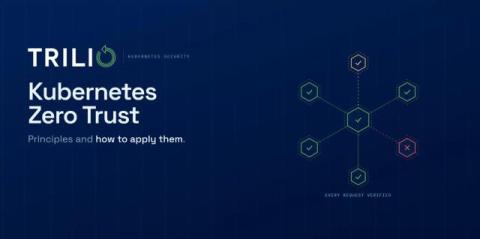
Kubernetes Zero Trust: Principles and How to Apply Them

Kubernetes trusts everything inside the cluster by default. Any pod can reach any other pod, IPs change with every rolling deployment, and one compromised container gives an attacker a path across your entire environment. Kubernetes zero trust replaces that default with a simple rule: Never trust, always verify, regardless of where a request comes from.
NEW! WAF Posture Management: Building Stronger WAF Programs for the Mythos Era

It comes as no surprise that the Mythos era continues to put pressure on security teams: it’s never been easier for attackers to find and weaponize vulnerabilities at scale, and comparable capability is only becoming more available. The gap between a CVE’s disclosure and its exploitation is compressing fast, while patches still take days to weeks to roll out.

Cybersecurity risk management: A complete guide for security teams

Accelerating security solutions for small businesses‍ Tagore offers strategic services to small businesses. A partnership that can scale‍ Tagore prioritized finding a managed compliance partner with an established product, dedicated support team, and rapid release rate. Standing out from competitors‍ Tagore's partnership with Vanta enhances its strategic focus and deepens client value, creating differentiation in a competitive market.

The risk of using abandoned packages in the age of LLMs

This post is an unfortunate affirmation of our prior research into abandoned open-source packages, where we found that 11% of the most-downloaded packages have been abandoned and not actively maintained, becoming invisible vulnerabilities to your scanner. Today we share a zip-slip vulnerability we found in extract-zip (CVE-2026-19693), an npm package with over 20 million weekly downloads.

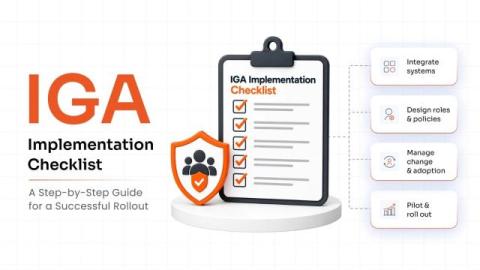
IGA Implementation Checklist: A Step-by-Step Guide for a Successful Rollout

Identity Governance and Administration (IGA) sounds straightforward on paper: control who has access to what, prove it to auditors, and automate the boring parts. In practice, most organizations underestimate how many moving parts an IGA rollout actually has. This checklist breaks down the exact steps, decisions, and evaluation criteria you need to move from planning to a stable, audit-ready deployment.

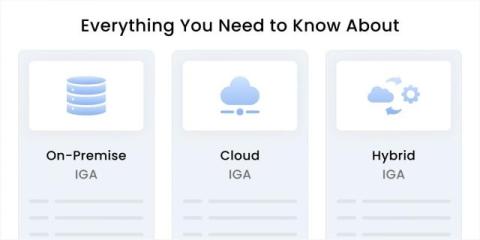
On-Premise vs. Cloud IGA: How Do You Choose the Right Deployment for Your Organization?

Choosing the right deployment model for your Identity Governance and Administration (IGA) system is a high-stakes decision that affects many aspects of your organization. It determines how you manage access across your entire enterprise. It also dictates your audit readiness and integration capabilities. Now you might assume that the cloud is the only modern option. However, many organizations are changing their infrastructure strategies.

What Every UK Driver Should Know About Vehicle Registration

Navigating the world of vehicle ownership can feel like a complex maze of paperwork and legal obligations. From the moment you buy a car to the day you sell it, there are several key documents and processes you need to understand. Getting these details right is not just about following rules; it's about protecting your investment, ensuring you can drive legally and sell your vehicle without any hitches. This guide will walk you through the essential aspects of vehicle registration and ownership in the UK, providing clear steps and practical advice.

Solving the SOC Data Problem: How Modern SIEM Platforms Cut Noise Without Cutting Visibility

Security teams have a data problem, not a detection problem. Most SOCs today aren't short on logs - they're drowning in them. Every firewall, endpoint, identity provider, and cloud workload generates a steady stream of events, and somewhere inside that noise sits the handful of signals that actually matter. The challenge isn't collecting more data. It's finding the right data fast enough to act on it.

Tactics Techniques and Procedures TTP: A 2026 Guide

Tactics, techniques, and procedures are the behavioral language of an adversary: tactics explain why, techniques explain how, and procedures describe the specific implementation. MITRE created the first ATT&CK model in September 2013 and publicly released it in May 2015 with 96 techniques organized across 9 tactics. That origin matters because TTPs turn scattered security events into an operational model.