Security | Threat Detection | Cyberattacks | DevSecOps | Compliance

The Latest Cybersecurity News & Insights From Around The World


AI Agents Vulnerabilities and Prompt #cybersecurity #aisecurity
Mend.io, formerly known as Whitesource, has over a decade of experience helping global organizations build world-class AppSec programs that reduce risk and accelerate development -– using tools built into the technologies that software and security teams already love. Our automated technology protects organizations from supply chain and malicious package attacks, vulnerabilities in open source and custom code, and open-source license risks.

What is an AI Bill of Materials (AI BOM)?
What’s happening under the hood of your AI systems? AI is now a crucial element of modern software applications, and if you don’t have visibility into its components, you’ll be left blind. Similar to a Software Bill of Materials (SBOM), an AI Bill of Materials, AI BOM, or AIBOM has become a crucial framework for documenting and securing this new and complex supply chain. This article is part of a series of articles on Shadow AI.

Runtime Security vs. Static Security in the Cloud
Cloud security is often divided into two: Runtime Security and Static Security. While both are crucial to protecting cloud environments, they differ significantly in their objectives, methodologies, and effectiveness against different types of threats. Understanding these differences helps organizations build a robust security strategy by leveraging the strengths of both.

How Keeper Prevents Secrets Sprawl in DevOps Environments
Secrets sprawl refers to the insecure spread of credentials, tokens, keys and other sensitive information across codebases, cloud services and infrastructure. It introduces significant operational and security challenges, including weak points in CI/CD pipelines, limited visibility into where secrets are stored, error-prone manual rotation processes and a higher risk of compliance failures.


Shift Left AI Security #coding #cybersecurity
Mend.io, formerly known as Whitesource, has over a decade of experience helping global organizations build world-class AppSec programs that reduce risk and accelerate development -– using tools built into the technologies that software and security teams already love. Our automated technology protects organizations from supply chain and malicious package attacks, vulnerabilities in open source and custom code, and open-source license risks.
DevOps Threats Unwrapped: Mid-Year Report 2025
From minor hiccups to full-blown blackouts, the first half of 2025 made it clear that even the most trusted DevOps platforms are not immune to disruption. In this ecosystem, every commit, push, and deployment relies on complex systems that, despite their brilliance, are fragile. Like a Jenga tower of integrations, it takes just one wrong move – a misclicked setting, a leaked secret, an API failure – for the whole thing to wobble.
What is Generative AI Security?
From supporting customers through intelligent chatbots to auto-generating code, GenAI is revolutionizing enterprise operations. But as Spiderman coined, with great power comes great responsibility. This article will look at generative AI security, including trends and best practices to stay on top of.
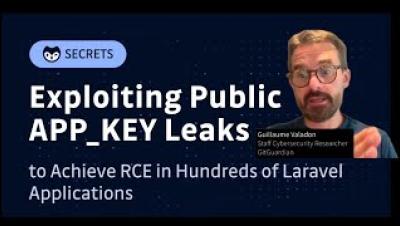
Laravel APP_KEY Leaks Lead to RCE: GitGuardian + Synacktiv Reveal Massive Threat
In this video, cybersecurity researcher Guillaume Valadon of GitGuardian breaks down how exposed Laravel APP_KEYs on GitHub can lead to full Remote Code Execution (RCE) in real-world applications. Working in collaboration with Synacktiv, the team uncovered 260,000 exposed keys, validated 600+ vulnerable apps, and revealed that over 35% of leaks also exposed critical credentials like database passwords, cloud storage tokens, and API keys.