Security | Threat Detection | Cyberattacks | DevSecOps | Compliance

Observability: What You Need to Know

Observability has recently become quite the buzzword, populating headlines in DevOps and IT publications. Industry experts like Charity Majors, CTO and co-founder of Honeycomb, and Cindy Sridharan, to name a few, have been spreading the word about the importance of observability, making it clear that it’s more than just a passing trend, it’s an approach that DevOps organizations need to adopt.

How to SSH into a Self-driving Vehicle

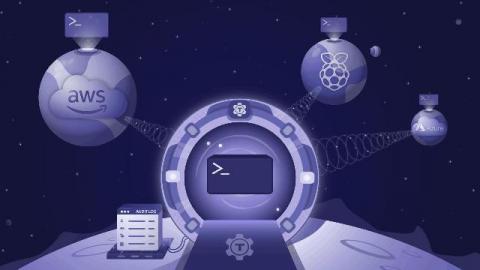
Over the last couple of years, we’ve started to see computers take to the street, and lucky for us, it’s been mostly to help us get deliveries or transport us around. These robots are a combination of sensors, compute units, and some form of connectivity. They have personalities, and if you look closely, two cute eyes on Postmates’ Serve that provide it with stereo vision to navigate the streets.

Free Go Module Vulnerability Scanning in Visual Studio Code

If you’re a Golang developer using Visual Studio Code, keeping at-risk Go Modules out of your apps just got easier, and for free. Today we’re announcing a new version of the JFrog extension for VS Code, available for free download. This integration brings live vulnerability information about every public Go Module you’re using directly into your source editor from the rich metadata of JFrog GoCenter.

Copy and Paste Code: How to Lose Your Job Using Open Source Code

Have you ever wondered whether it’s ok to copy and paste code from an open source project? If you have, you’re not alone. A quick look around several developer websites shows a number of variations on this age-old question. It is never ok to copy and paste code from an open source project directly into your proprietary code. Don’t do it. Just don’t. Even if you’re on a tight deadline. Even if it’s only one loop.

From Zero to Zero Trust

Blockchain, IOT, Neural Networks, Edge Computing, Zero Trust. I played buzzword bingo at RSA 2020, where the phrase dominated the entire venue. Zero Trust is a conceptual framework for cybersecurity that characterizes the principles required to protect modern organizations with distributed infrastructure, remote workforces, and web connected applications.

How guardrails secure and accelerate K8s deployments

It’s clear from the latest Cloud Native Computing Foundation survey that containerized environments have become mainstream, increasing automation at scale for companies. But, in the cloud-native environment, changes are constant and runtime is extremely dynamic. And while automation can help eliminate manual work, it can also replicate mistakes and risk at cloud scale.

Panel Discussion: Forrester's Latest Wave Report on Software Composition Analysis 2019

Last week The Forrester Wave™: Software Composition Analysis, Q2 2019 was published. We took part in MediaOps panel discussion to discuss the results of the report and which SCA vendors are right for software development and security teams and their needs.

Securing Container-Based Applications at the Speed of DevOps

Thanks to containerization and automation, applications are being developed and delivered faster than ever. With tools such as AWS ECR, developers are able to store, manage and deploy Docker container images without having to worry about operating their own container repositories or scaling the underlying infrastructure. With this, however, arise challenges around managing the security and compliance aspect of your container images. With tools such as WhiteSource, developers are able to manage the security of their containers and container images with no impact on agility and speed.

Whose vulnerability is it anyway?

Application security is a top priority today for companies that are developing software. However, it is also becoming more challenging and complex as release frequency continues to rise, more open source components are adopted, and the requirements for data security are getting stricter. Thanks to new DevOps practices and tools, development cycles are getting shorter, allowing organizations to meet market demands and deliver a superior customer experience, but is application security keeping up?